
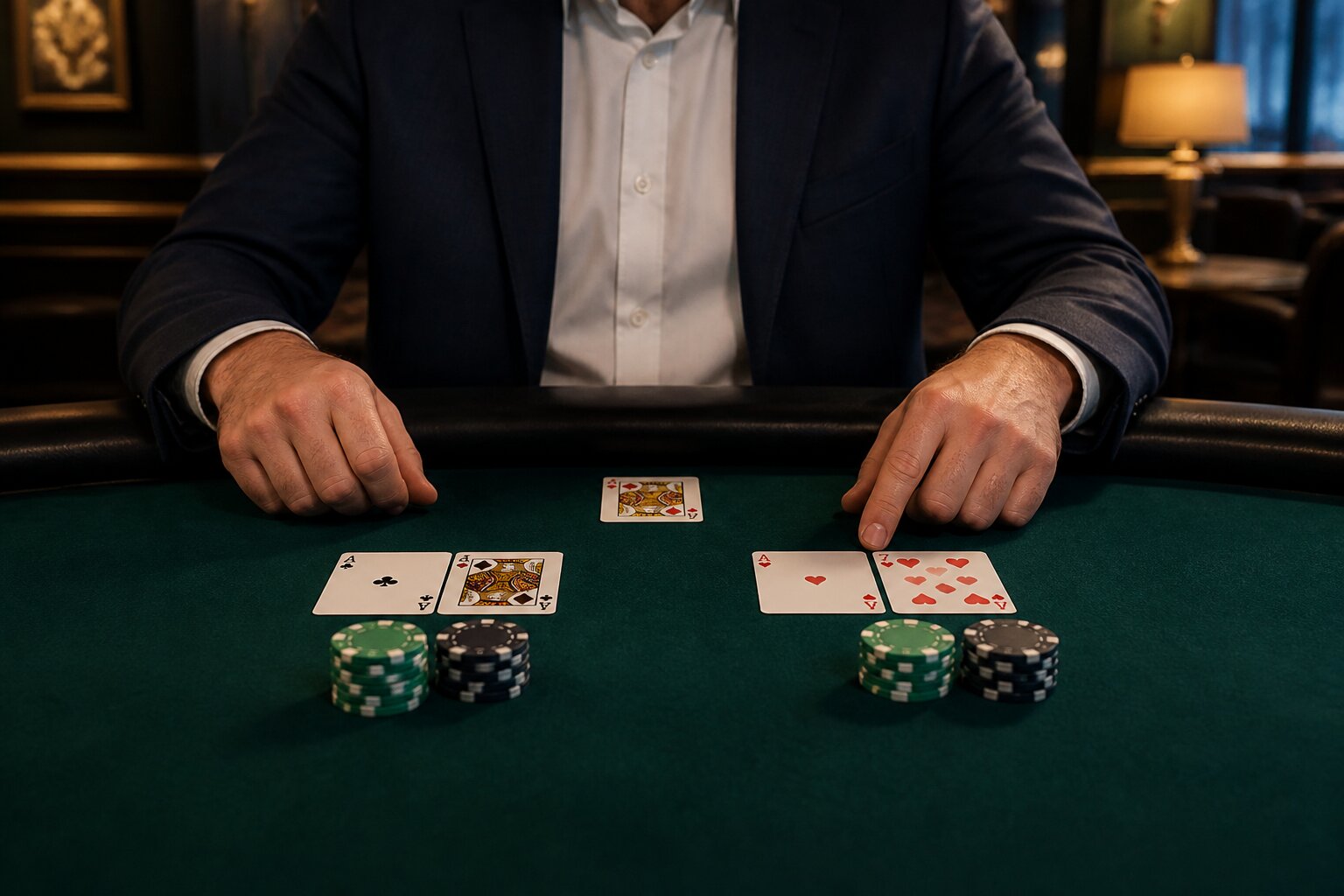
Blackjack might seem simple, but deciding how many hands to play adds a new dimension to the game. You may be weighing the calm of a single hand against the energy of playing two at once.
This article walks through how multiple hands work, the practical pros and cons, common misconceptions and which approach suits different player types — all to help you choose the style that fits your budget and tastes.
How Does Playing Multiple Blackjack Hands Work?
Playing multiple hands means placing separate bets on more than one spot at the table during the same round. Each hand is dealt and resolved independently, so the dealer treats each bet as a distinct outcome.
In a physical casino you tell the dealer which extra spots you want, provided there’s space. Online, the software usually shows several seat positions you can activate before the deal. In all cases you must put up a separate stake for every hand, and table limits apply to each bet.
Because each hand is separate, the practical effect is a faster rhythm and higher total expenditure per round. That makes it sensible to be clear about how much you want to risk over the session before you start, so the game stays enjoyable.
Is It Better To Play One Hand Or Two Hands At Blackjack?
There’s no universal “better” option — both choices have trade-offs. A single hand allows calm, focused decision‑making and tends to stretch your bankroll over a longer session. It’s easier to track what’s happening and to stick with a consistent approach.
Two hands increase action and engagement. You make more decisions each round and finish more hands in the same amount of time. That can suit players who like variety and activity, but it also accelerates how quickly your balance moves up or down.
Choose the approach that matches your playstyle and how disciplined you are with your stakes. If you prefer clarity and control, one hand is usually the steadier fit. If you enjoy variety and can handle a quicker pace, two hands can feel more rewarding.
Pros Of Playing Two Hands At The Same Time
Playing two hands brings practical benefits beyond the thrill. You encounter a wider range of card combinations in the same session, which can make the game less repetitive and expose you to different tactical situations. For players who enjoy testing strategy in varied scenarios, that variety can be instructive.
Having two hands also shortens the time between interesting decisions: doubling, splitting or standing choices arise more frequently, which keeps attention engaged. For someone who dislikes long pauses at the table, that steady stream of decisions is appealing.
Finally, two hands can help when you want a shorter, more intense session. Because more outcomes occur per minute, you get through more rounds without needing to extend the time you spend at the table.
Cons Of Playing Two Blackjack Hands At Once
The most tangible drawback is the higher cost per round. Two hands mean twice the stake each deal, so bankroll depletion happens faster unless you reduce the bet size per hand. That makes bankroll management more important.
Managing two sets of cards also raises cognitive load. Newer players or those who prefer a measured pace may find it harder to keep a clear head, which can lead to inconsistent decisions. A faster tempo can also make it easier to lose track of losses or to continue playing past a pre‑set limit.
Because outcomes are independent, playing two hands is not a method for recouping losses; increasing the number of hands only changes the rhythm and total exposure, not the expected result per unit staked.
Does Playing Two Hands Affect The House Edge?
The house edge is determined by the rules of the game — dealer behaviour, payout rates and allowed player options — and that does not change simply because you play multiple hands. Every hand you place faces the same underlying statistical disadvantage inherent to the rules in play.
What does change is variance: playing more hands in the same time increases swings in your balance, because you are resolving more independent bets. That higher variance means outcomes will feel more volatile over short stretches, even though the long‑term expected return per hand remains the same.
If managing variance is important to you, consider adjusting bet sizes when playing multiple spots so your overall exposure stays within comfortable bounds.
Common Myths About Playing Multiple Blackjack Hands
One persistent myth is that more hands improve your odds. Because each hand is independent and governed by the same rules, adding hands doesn’t alter the expected return per stake.
Another misconception is that simply increasing the number of hands will speed up recovery from a losing run. In truth, while more hands create more opportunities for wins, they also create more opportunities for losses; the balance is still governed by the game’s math.
Some players think multiple hands let them “apply a strategy” faster. While you do encounter more different situations in a shorter time, effective strategy still relies on consistent, well‑considered choices for each hand rather than quantity alone.
Which Option Suits Different Player Types?
For players who favour reflection over pace — those who like to weigh each decision and preserve their bankroll — one hand usually fits better. It makes it simpler to keep track of bets, outcomes and any tactical adjustments.
Players who prefer a busier, more varied session may enjoy two hands. This approach brings more decision points and a brisker tempo, which can be satisfying when you want a compact, engaging session.
If you are testing different strategy tweaks, multiple hands can give you a broader sample of situations in less time. Conversely, if you are building confidence or learning the game, a single hand keeps things straightforward.
How To Decide Between Playing One Or Two Hands?
Deciding comes down to how you balance budget, temperament and what you want from the session. Think about how long you want to play, how much you are willing to spend overall, and whether you favour steady, focused play or a quicker, more eventful experience.
Look At Your Budget
Consider the total you’re prepared to risk during a session and how many deals you expect to play. Two hands will reduce the number of deals you can afford at the same stake per hand, so adjust stake size or session length accordingly.
Think About Your Style
If you prefer deliberate choices and a controlled pace, a single hand will usually suit you. If you enjoy variety and frequent decisions, two hands will deliver that, provided you can maintain clear thinking under the faster tempo.
Focus On Enjoyment
Pick the option that keeps the activity enjoyable and sustainable. If the game begins to feel hurried or you’re tempted to increase stakes to chase outcomes, that’s a sign to reassess and possibly switch to a more measured approach.
If gambling stops being enjoyable or you struggle to control how much you spend, consider stepping back and seeking support from recognised help organisations.
Conclusion
Playing one hand or two at once is a personal choice with clear trade‑offs: single hands favour control and clarity, while two hands increase variety and tempo at the cost of higher exposure and variance. Think about your session goals, bankroll and how you like to play, then choose the approach that fits. If you ever feel the pace or stakes are getting away from you, pause and reassess so the experience stays within the limits you set.
**The information provided in this blog is intended for educational purposes and should not be construed as betting advice or a guarantee of success. Always gamble responsibly.