
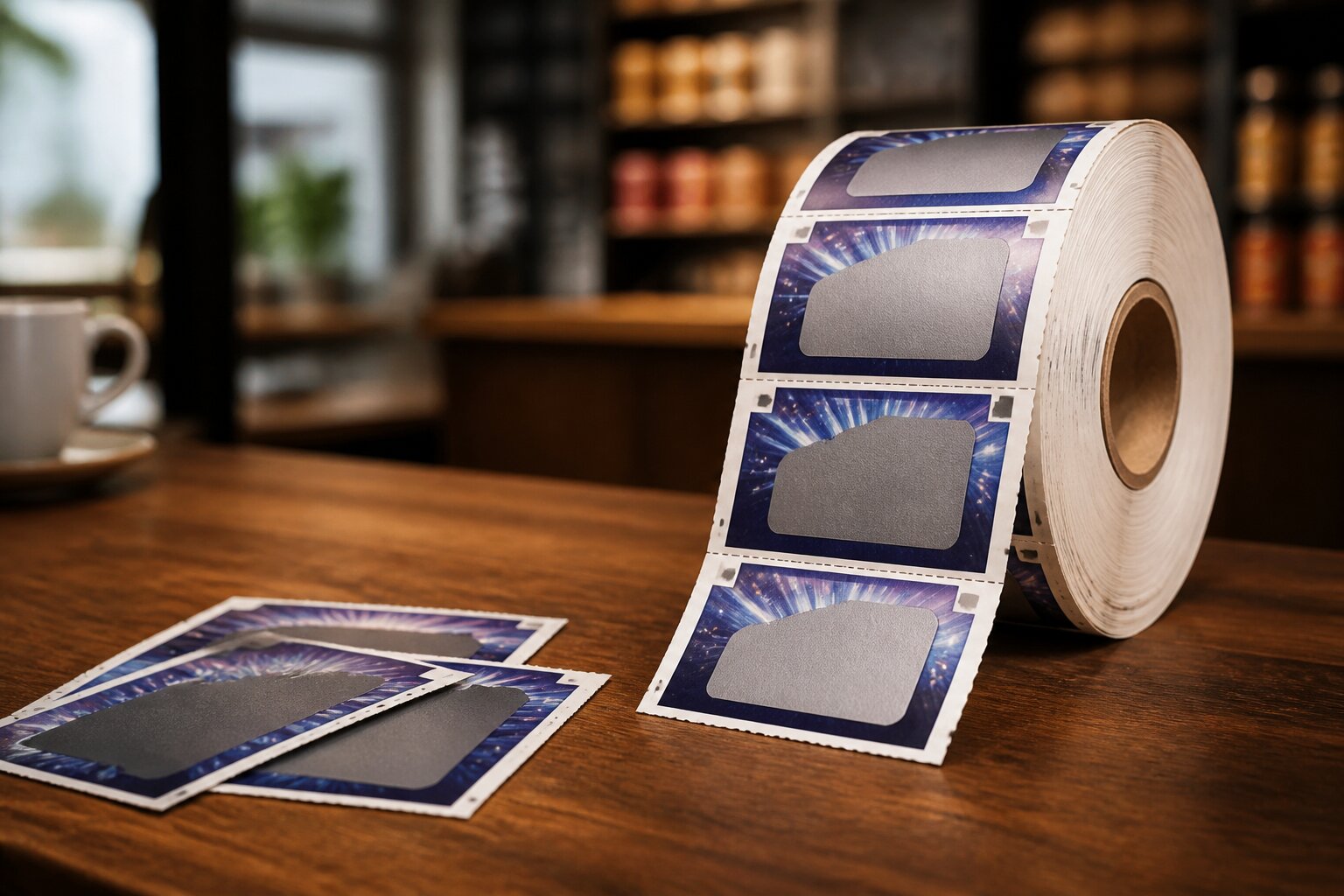
Ever wondered how many scratch cards come in a single roll, or where you could actually buy a whole bundle? Scratch cards are sold in set pack sizes that make life easier for retailers, and knowing how those sizes work helps explain what you can expect if you ask for a full roll.
This guide explains the typical roll sizes, retailers’ practices, legal limits around sales and what myths to ignore. If you want to know whether buying in bulk makes sense, the answers are all here.
How Many Scratch Cards Come in a Standard Roll?
Roll sizes are organised by the ticket price so shops can manage stock and the public can easily recognise each game. Typical roll sizes in the UK are:
For £1 cards, a roll is commonly 180 tickets. This is the usual size for lower-priced games that see high turnover in shops.
For £2 cards, rolls are often 120 tickets, which balances demand and storage for mid-priced instant games.
For £3 cards, rolls frequently come in sizes of about 85 to 100 tickets, depending on the specific game format.
For £5 cards, rolls typically contain around 60 tickets, reflecting their higher value and lower sales volume.
These standards apply to the main instant-win games circulating through authorised retail channels. The packaging is sealed, and the number of tickets per roll is set when the game is printed and distributed.
Does the Number of Scratch Cards in a Roll Vary by Retailer or Game Type?
Most retailers stock the standard roll sizes tied to a game’s price, but there can be exceptions. Special or limited-run games sometimes use alternative packaging, and private or charity instant tickets may have different counts printed on their packaging.
Smaller stores may choose to keep fewer of the higher-value rolls to match their sales pattern, while larger outlets usually carry the full range in standard sizes. Ultimately, the roll size is determined by the game’s publisher and the printed run, while the retailer decides which games and how many rolls to stock.
Retailer policies also affect whether you can buy a whole roll. That difference in practice explains why availability can vary between outlets and why some customers are asked to speak to a manager before a large purchase. The next section looks at where you can try to buy multiple tickets or a full roll.
Where Can You Buy Full Rolls of Scratch Cards in the UK?
Full rolls are generally intended for retailers rather than the public, but bulk purchases are possible in some circumstances. National instant tickets must be sold in person from authorised outlets so age checks can be made at the point of sale.
High-street supermarkets, convenience stores and independent newsagents are the usual places to buy physical scratch cards. Many of these outlets will only sell individual tickets, but if stock allows and the retailer agrees, a full unopened roll may be made available. The decision is at the store’s discretion and often requires manager approval.
Online sales of physical scratch card rolls are not permitted. Official websites and apps sell digital instant games rather than physical tickets. Any third-party site claiming to dispatch sealed rolls should be treated with caution because those sales are not supported by the standard retail system.
If you are considering a large purchase, it helps to call ahead to confirm stock and the retailer’s policy. The next section outlines the legal and store-level restrictions that can affect such a purchase.
Are There Restrictions on Buying Scratch Card Rolls?
There are clear rules around who can buy scratch cards and how they are sold. Only people aged 18 and over may purchase instant tickets, and retailers must be able to verify age if there is any doubt.
Retailers may refuse a sale of a full roll for several reasons. Limits on the number of tickets sold in one transaction, concerns about resale, or store policy guided by the game operator can all result in a refusal. Some shops set a maximum number of tickets per customer to manage demand and reduce the potential for excessive spending.
When a bulk purchase raises questions, staff may carry out additional checks, which can include a brief conversation about the purpose of the purchase. These checks are part of routine safeguards and help ensure transactions comply with legal and industry standards. The following section describes what happens at the counter when a full roll is approved for sale.
What to Expect When Purchasing a Full Roll of Scratch Cards
If a retailer agrees to sell a whole roll, the process is straightforward but may involve a few extra steps. Staff will usually need to consult a manager, and the roll will be handed over sealed in its original packaging to show it has not been tampered with.
You should expect an age verification check if the buyer’s age is not obvious. The till will record the sale as a standard transaction and you will receive a normal receipt listing the tickets purchased. Depending on store policy, staff may also provide information about responsible play resources; these are part of the standard retail environment.
A retailer may decline to sell a roll if they suspect the tickets are intended for resale or if the purchase does not fit their guidelines for bulk sales. Calling ahead to discuss the request reduces the chance of an on-the-spot refusal. The next section examines common misunderstandings that often surround buying whole rolls and bulk purchases.
Common Myths About Buying Scratch Card Rolls
There are a number of persistent myths about large purchases of instant tickets. Separating fact from fiction helps set realistic expectations and keeps spending in check.
Myth 1: Buying a full roll guarantees a big win
Some assume a sealed roll must contain a top prize. In reality, prizes are distributed across the printed run for each game. A roll may include winning tickets, but it is not guaranteed to contain any specific level of prize.
Myth 2: Whole rolls always offer better odds
Purchasing more tickets does not change the published better odds of any one ticket. Each card in a game carries the same chance of paying out within the overall structure set by the publisher.
Myth 3: Every roll contains all prize levels
Top prizes are allocated across the total number of tickets produced for a game, not per roll. It is possible for some rolls to contain no high-level prizes while others contain several.
Myth 4: Buying rolls is a way to beat the system
No buying pattern overcomes the maths built into a game. Bulk purchases increase total expenditure and do not provide extra protection against losses. Setting a spending limit and treating ticket buying as occasional entertainment helps keep outcomes in perspective.
**The information provided in this blog is intended for educational purposes and should not be construed as betting advice or a guarantee of success. Always gamble responsibly.