
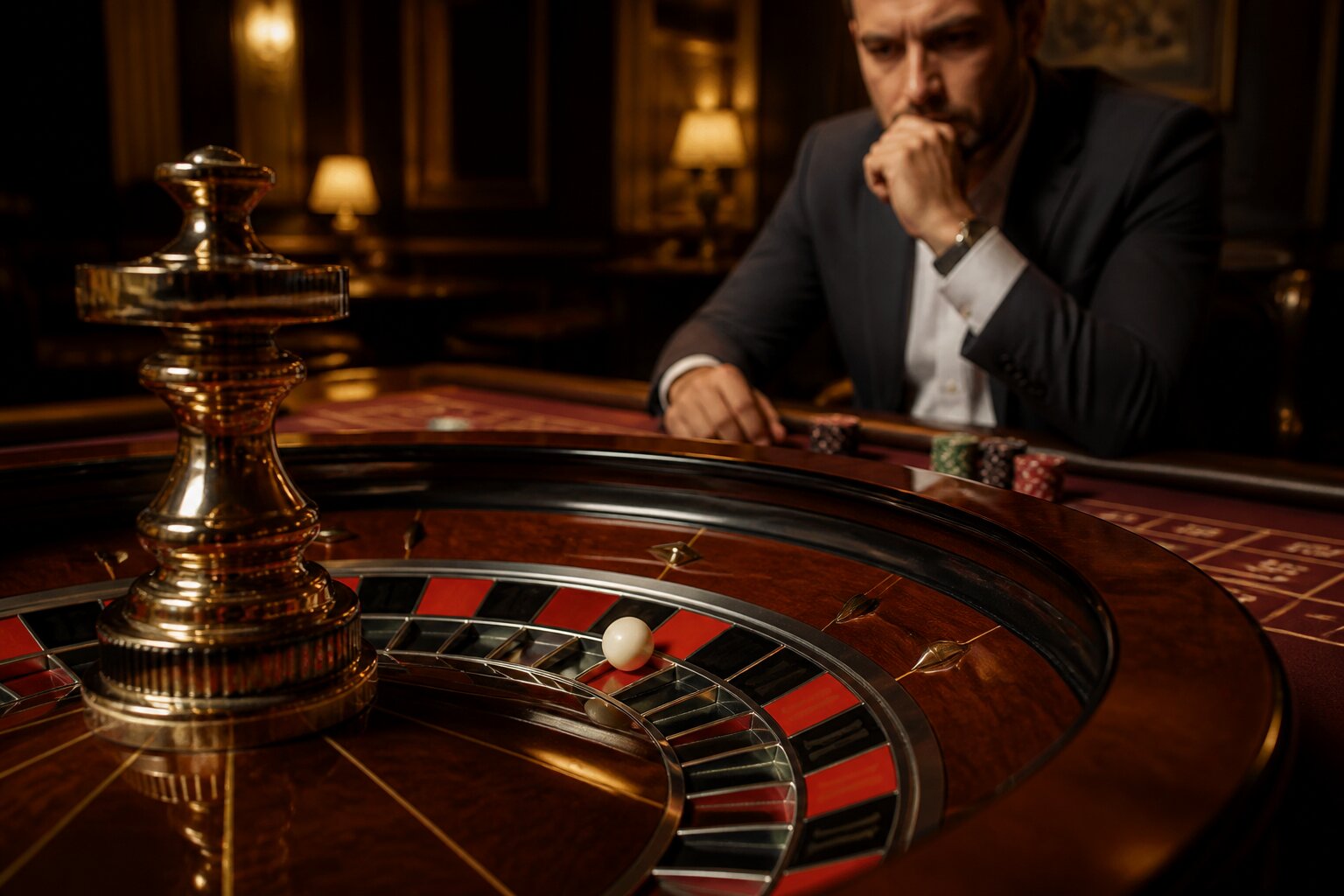
The sight of the wheel turning and the small ball hopping between pockets has drawn players for generations. Many believe they can read the table or out-think the game, while others enjoy it simply for the thrill of the spin.
If you want to know how much control a player actually has, this article cuts through the myths and explains how roulette works, what the maths says, and what to look for when choosing where to play.
Read on to see whether any skill can influence the outcome and what that means for your play.
How Does Roulette Work?
Roulette centres on a wheel, a ball and a betting layout marked with numbers and colours. Players place chips on numbers, runs of numbers, colours or other groupings; the wheel is spun and the ball eventually settles into a numbered pocket. Bets that match the final pocket win and are paid out according to fixed odds, while all other bets are lost.
There are two common wheel types: the single-zero variant used widely in Europe, and the double-zero version popular in some other markets. The additional zero pocket changes the payouts and the overall odds for players. Casinos and venues can also apply small rule variations—so checking table-specific rules before placing bets helps you understand exactly what is on offer.
Understanding the House Edge in Roulette
The house edge is the percentage advantage the casino keeps from all wagers over the long run. In roulette this edge comes mainly from the green zero pocket(s). Because those pockets are not part of the typical red/black or odd/even group bets, they ensure the mathematical return to players is slightly below 100%.
In single-zero roulette this margin is about 2.7%; with a double-zero wheel it rises to around 5.26%. That difference affects the expected return over many spins and is why players see different long-term outcomes depending on the wheel they play. Knowing these figures helps set realistic expectations about how the game behaves over time.
Understanding the house edge also explains why no system can reliably overcome the built-in advantage: the percentages are fixed by the wheel’s design and payouts.
Is It Possible to Influence Roulette Outcomes?
Roulette often invites speculation about whether tactics can change results. Some players study the wheel, follow past numbers or apply elaborate staking plans in the hope of finding an edge.
In practice, each spin is independent and governed by the wheel’s physical properties or, in online play, by certified random number generation. Physical wheels are inspected and maintained to avoid bias; digital versions are audited to ensure results meet regulatory standards. Because of this, attempts to predict or control specific outcomes are not supported by how the game operates.
That said, players can alter their own experience: choosing different bet types, managing bet sizes or selecting a wheel with a lower house edge will change their pattern of wins and losses, but these choices don’t change the underlying randomness of each spin.
Common Myths About Skill in Roulette
Many common ideas persist: that tracking previous results reveals a pattern, that certain bet progressions beat the house, or that close observation of a wheel will uncover a weakness. These notions are appealing because they promise a method where none exists.
Patterns in past spins do not influence future spins, and betting progressions only change the size and timing of wins and losses without improving expected return. While occasional biased wheels have been found in history, modern venues and software providers prevent this through maintenance and oversight, so bias is not a reliable or practical route to advantage.
If you find these myths intriguing, it’s useful to view them as games of probability and expectation rather than as hidden strategies for consistent profit.
What Does It Mean for Players: Skill Versus Chance?
Compared with games where player decisions affect outcomes—such as poker or some forms of blackjack—roulette offers very limited scope for skill to change results. Players can decide how much to wager and which bet types to use, and those choices shape the betting experience and short-term variance. However, they do not alter the mathematical edge built into the game.
This distinction matters because it frames how players should approach roulette: as an activity where one’s choices influence exposure and pacing rather than the odds themselves. Choosing low-edge variants, adjusting bet sizes, and setting personal limits will affect how long your bankroll lasts and how swings feel, even though they don’t improve the long-term expected return.
Choosing a Casino: What Should British Players Look For?
Picking where to play affects fairness, security and the tools available to manage play. Confirm that the operator is licensed by the UK Gambling Commission and that terms and conditions are clear and easy to find. Transparent payout information, accessible customer support, and visible rules for each game are practical indicators of a well-run site or venue.
Look for features that help you control play, such as deposit limits, voluntary time-outs and straightforward self-exclusion options. Those tools let you tailor your experience without changing how the game itself works. Also check that the operator provides links to independent organisations offering help and advice—these are useful if you ever want external support.
Taking these factors into account makes it easier to enjoy roulette with confidence in the fairness and safety of the place you choose.
Conclusion: Roulette as a Game of Chance or Skill?
Taken together, the mechanics of the wheel, the mathematics of the house edge and the scrutiny applied by regulators make roulette a game where outcomes are driven by randomness rather than player skill. Choices about bet type and stake size shape the experience and short-term results, but they do not change the mathematical expectation of the game.
If you play roulette, approach it as entertainment shaped by clear odds. Know the rules and the house edge, select reputable providers, and use the available tools to keep your play aligned with your limits. That way you can enjoy the spins while keeping control of your experience.
**The information provided in this blog is intended for educational purposes and should not be construed as betting advice or a guarantee of success. Always gamble responsibly.