
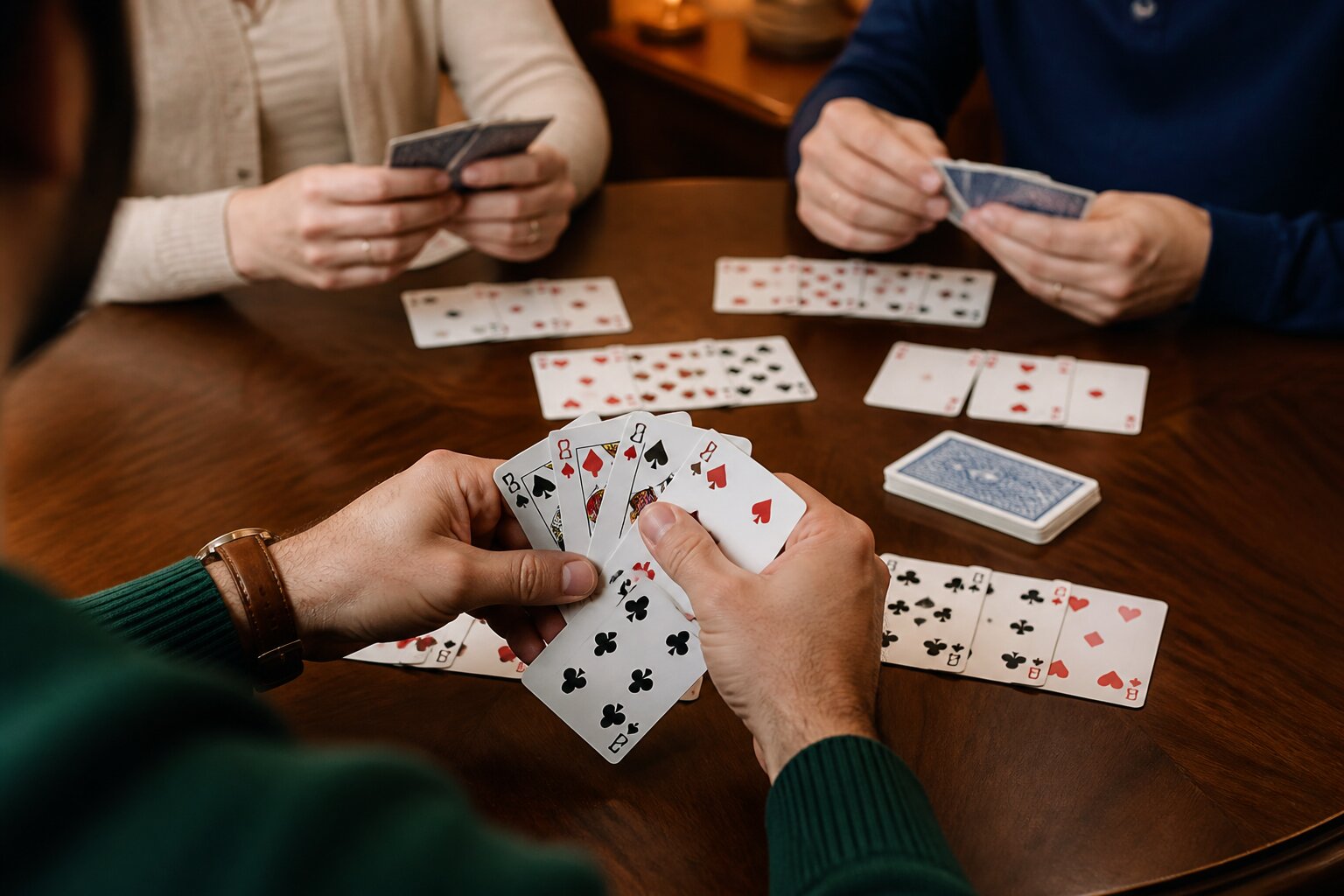
Rummy is a classic card game that’s easy to pick up and can give you many enjoyable hours with friends and family. Whether you’re completely new or just need a quick refresher, a clear understanding of the rules gets you straight into the fun.
Below you’ll find a practical guide to how Rummy works, the number of cards typically dealt, and the core rules you’ll need to start playing confidently.
What Is the Rummy Card Game?
Rummy is a strategic card game played with a standard pack of cards. The central aim is to arrange the cards in your hand into sets and runs, then shed those cards so you’re the first to finish the round.
The game has evolved over more than a century and now exists in many forms around the world. That variety means you’ll encounter versions that tweak dealing, melding and scoring, but the basic idea — forming valid combinations to reduce the cards in your hand — stays the same.
Rummy is commonly played in casual social settings. Its balance of simple rules and decision-making makes it suitable for players of many ages and abilities, and it’s easy to adjust the pace and complexity to match the group.
How Many Cards Are Dealt in Rummy?
The number of cards dealt depends on the number of players and the version you choose. In many standard games, players receive 10 cards when there are four or more participants. For two-player games, 10 cards each is also common, while three-player games often use 7 cards per person.
Different variants can change these counts. For instance, one popular form typically gives each player 10 cards, whereas another commonly used version deals 13 cards. Agreeing the deal before you begin keeps the game fair and prevents confusion.
Once the hands are dealt, the remaining cards form the draw pile and the top card is turned face-up to start the discard pile, establishing the flow of the round.
Setting Up a Standard Rummy Game
A typical setup uses a single 52-card deck, with a second deck added when the player count is high. The cards are shuffled and distributed one at a time in a clockwise direction until everyone has the agreed number of cards.
The leftover cards sit face-down as the draw pile, and the top one becomes the start of the discard pile. Who goes first is usually decided by the dealer or another simple, mutually acceptable method.
It helps to agree on any house rules before starting, such as how jokers are used or whether melds can be added to by other players. Also, if money is involved, set clear, modest limits and stop if the game ceases to be enjoyable. That keeps the focus on fair play and social fun.
How Does the Game Progress?
After setup, play moves around the table in a steady rhythm. On each turn a player replenishes their hand from either the draw pile or the discard pile, evaluates their cards for possible combinations, and then makes a discard to end the turn.
Players look for sets, which are groups of three or four cards of the same rank but different suits, and runs, which are sequences of three or more cards in the same suit. Depending on the variation, players may lay these combinations down during play or only when they are ready to finish the round.
The sequence of drawing, rearranging and discarding continues until someone meets the agreed conditions to end the round. That structure keeps each turn meaningful while the table as a whole works toward a conclusion.
What Are the Rules for Drawing and Discarding Cards?
During a turn, a player takes a single card from either the top of the face-down draw pile or the top of the face-up discard pile. After examining the hand for legal combinations, the player places one card face-up on the discard pile to close their turn.
Maintaining the same number of cards at the end of each turn preserves balance among players, except when someone goes out and the round ends. These simple constraints keep play fair and predictable, allowing strategy to matter.
Sets, Runs, and Melding: What Do They Mean?
A set consists of three or four cards of the same rank in different suits, while a run is three or more sequential cards of the same suit. For example, three sevens in different suits form a set; 5, 6 and 7 of spades form a run.
Melding refers to placing completed sets or runs face-up on the table. Some versions allow melding during play, letting other players build onto those melds; others restrict melding until a player is ready to finish the round. Melding reduces the cards in hand and makes your intentions visible to others, which can influence how opponents choose to play.
How Do You Win in Rummy?
Victory in a Rummy round typically goes to the player who successfully arranges their hand into valid combinations and disposes of all remaining cards, ending the round. When that happens, other players reveal their hands and count any cards that don’t form valid sets or runs as penalty points.
Games can be single-round affairs or a series of rounds with cumulative scoring. In multi-round play, the overall winner is usually the player with the lowest total of penalty points after the agreed number of rounds. Careful play and attention to opponents’ discards are central to reducing those penalties and improving your standing across rounds.
What Happens If the Stock Pile Runs Out?
If the draw pile runs out, the usual approach is to shuffle the discard pile and use it to form a new draw pile, while leaving the topmost card of the discard pile in place. This simple refresh keeps the game moving and prevents the round from stalling.
A standard procedure is to follow these steps:
- Take all cards from the discard pile except the topmost card.
- Shuffle those cards thoroughly to form the new draw pile.
- Place the new draw pile face down where the old draw pile was, keeping the top discard visible.
Refreshing the stock in this way preserves the natural flow of the game and ensures every player continues to have a fair chance to draw new cards. The game then proceeds until someone completes their hand or the agreed finish condition is reached.
Common Rummy Rule Variations Explained
Rummy takes many forms, each with its nuances in dealing, melding and scoring. A few well-known variations include:
- Gin Rummy, most often played by two people, where melding generally occurs only at the end of the hand and scoring follows specific rules.
- Indian Rummy, often played with two decks and larger hands, where players typically need at least two runs and one pure run to finish.
- Kalooki, which commonly uses jokers as wild cards to complete sets or runs.
- Rummy 500, where picking up multiple discard cards in one turn and scoring at the end of each round play a larger role.
Because these versions alter key mechanics, it’s wise to confirm which variation everyone prefers before the first hand is dealt.
Myths About Rummy: Is It All About Luck?
This heading often prompts a debate, but rather than attributing outcomes to chance, it’s more useful to consider the balance between the random order of cards and the decisions players make. The composition of your hand and the sequence of available cards are determined by the deal and subsequent draws, which cannot be controlled. What you can control is how you respond: which cards you keep, which you discard, when you reveal melds, and how you read opponents’ behaviour.
Practising attention to visible discards and adjusting strategy to the evolving table state are ways players influence their results. No strategy can remove uncertainty, but thoughtful play generally gives better results than careless decisions. If gambling is involved, keep stakes modest and make sure the activity remains social and controlled.
Final note: Rummy rewards observation and sensible choices. Play with clear rules and mutual respect, and rounds will resolve neatly with a clear winner and a tidy scoring outcome.
**The information provided in this blog is intended for educational purposes and should not be construed as betting advice or a guarantee of success. Always gamble responsibly.