
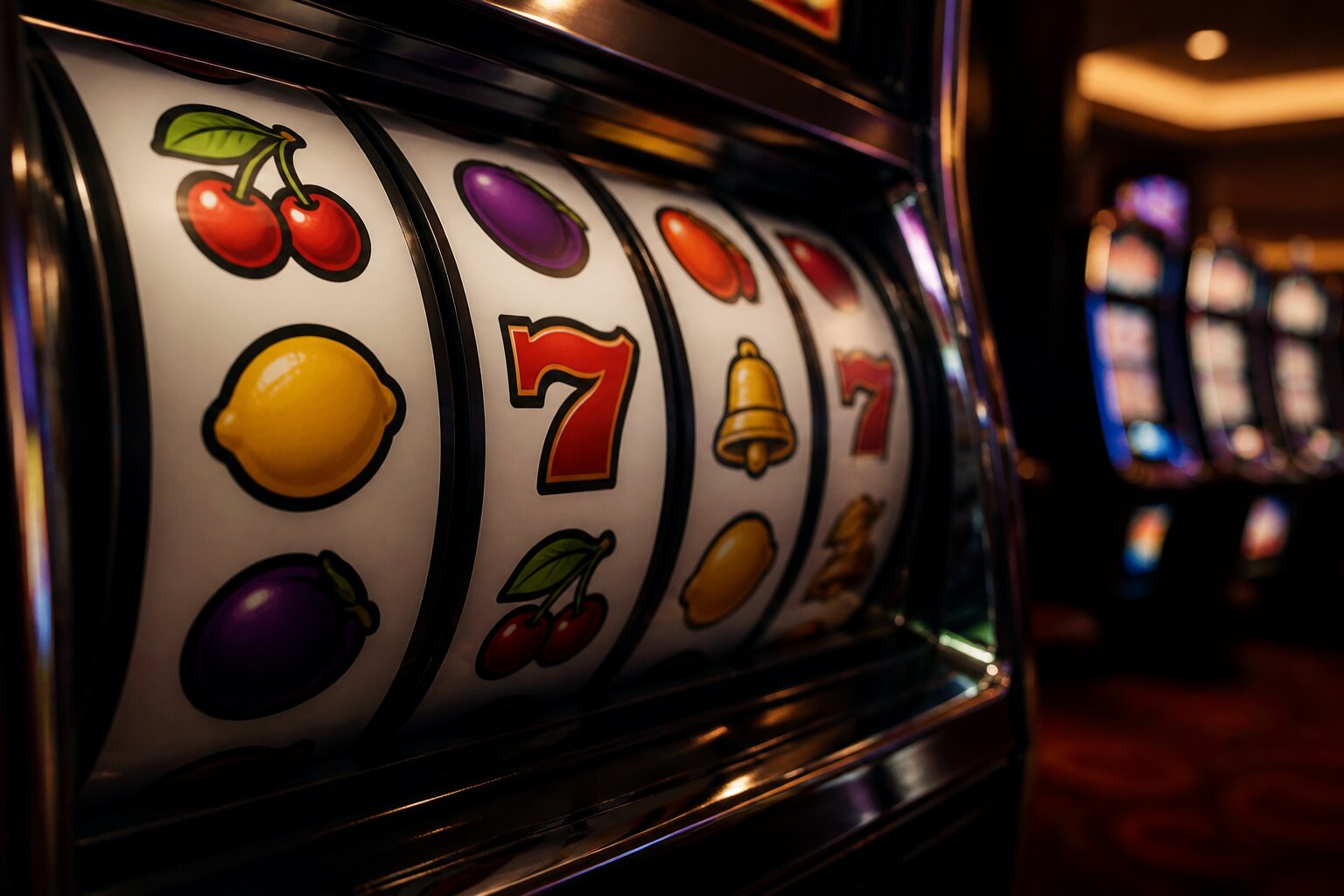
Ever wondered why some slot machines seem packed with endless symbols, while others look much simpler? Whether you’re spinning classic fruit slots or modern video games, the number and type of symbols on the reels can change everything — from the variety of combinations to the size of potential payouts.
You may have noticed wilds, scatters or bonus icons popping up, or wondered how those older machines managed with only a few classic images. The mechanics behind the reels are often more technical than they look, and understanding them makes it easier to follow how a game produces outcomes.
Read on to learn exactly how many symbols you can expect on a reel, the kinds of symbols you’ll meet, and the way they affect payouts and features. First, we’ll look at what decides the number of symbols in a game.
What Determines the Number of Symbols on a Slot Machine Reel?
The number of symbols on a reel comes down to design choices and regulatory standards. Developers pick how many symbols to include to achieve a certain balance between play variety and prize structure. More symbols generally expand the number of possible combinations, which designers can use to shape jackpot sizes and feature frequency.
Modern online games use virtual reels, so a reel can contain many more symbol positions than a physical machine. That flexibility lets designers add bonus features, expanding symbols and more complex behaviour without being constrained by hardware.
Regulation requires that outcomes are produced fairly and independently. Random number generators (RNGs) are tested by independent laboratories to confirm each spin is determined by software rather than by external influence. With the rules and technical checks in place, the reel layout affects what can happen on a spin but not whether the system is fair.
How Do Classic vs Video Slot Reels Differ?
Slot machines have shifted from mechanical cabinets to sophisticated digital games, and the reel systems reflect that change. The key distinction is physical constraints versus software-defined possibilities.
Classic fruit machines tend to have three physical reels, each with a fixed selection of symbols — commonly around 10 to 20 per reel. Those limits produce a relatively small set of combinations and straightforward odds and payouts. The experience focuses on simplicity: familiar symbols and clear payline requirements.
Modern video slots use virtual reel strips programmed into the game. A single virtual reel can include many more positions, sometimes dozens or hundreds, and games often run five reels or more. This allows for varied payline structures, special icons and layered features such as free spins or multipliers. The technical freedom gives designers scope to create richer themes and more varied prize structures. Next, we’ll examine the specific symbol types that populate those reels.
What Types of Symbols Appear on Slot Machine Reels?
Symbols fall into two broad groups: those that provide direct payouts and those that trigger special behaviour. The mix you see will be chosen to suit the theme and the game’s feature set, and each kind has a clear role within the paytable and rules.
Standard symbols are the backbone of most games. In classic slots these include fruits, bars, bells and sevens; in video slots they are often thematic images or low-value icons such as 10–A playing-card symbols. These produce the bulk of wins by appearing in required combinations on active paylines.
Special symbols perform distinct functions. Wild symbols substitute for other icons to complete winning lines; scatter symbols can award prizes or unlock features irrespective of paylines; and dedicated bonus symbols usually start a separate bonus round when they appear in sufficient number. These special icons add excitement and variety to play without altering the underlying probabilities set by the game’s programming. Having looked at what symbols do, the next part explains how they feed into actual payouts.
How Are Slot Machine Payouts Calculated?
Payouts are a result of how paylines, symbol combinations and symbol values interact, all defined in the game’s paytable and enforced by the RNG.
A payline is the pattern across the reels that determines where matching symbols must land to create a win. Classic slots often use a single horizontal payline, while video slots can have many lines, including zigzags and multiple win directions. The paytable lists which sequences pay and how much each symbol combination is worth.
Each symbol carries a value; high-value symbols yield larger returns when they form winning combinations, and low-value symbols pay out smaller amounts more frequently. When a winning combination appears on an active payline, the payout calculation uses the symbol value together with the bet size or stake allocation for that line. All of this happens within the game’s coded rules, so while the symbols and paylines determine what is possible, the RNG determines which possible result occurs on any given spin.
Does the Number of Symbols Affect Jackpot Odds?
The number of symbol positions on a reel alters the range of possible outcomes and how often particular combinations can appear. Adding more symbol positions makes long-shot combinations less frequent in absolute terms, which designers might use to create larger top prizes or rarer bonus triggers.
That said, the fundamental odds for any prize — including jackpots — are established in the game’s design and embedded in the RNG-driven mechanics. Increasing or decreasing symbol counts is part of how designers tune those odds, but it does not introduce any external influence on outcomes. With a clear idea of how symbol counts shape combination frequency, it’s useful to understand how reel strips and RNGs implement those possibilities.
Understanding Reel Strips and Random Number Generators
Reel strips are the ordered sequences of symbols that define what each reel can display. In mechanical machines they are physical strips; in digital games they are virtual arrays inside the software. The sequence and frequency of symbols on those strips set which combinations are possible and how commonly certain icons appear.
The RNG operates alongside the reel strips to determine spin outcomes. At the moment of a spin the RNG selects positions on each reel strip according to the game’s internal mapping, producing an outcome that matches the programmed distributions. Independent testing bodies verify RNGs and paytables so operators and players can trust that the system behaves as specified. With a clear technical basis for outcomes, it helps to address some common misunderstandings about how reels and symbols work.
Common Myths About Slot Reels and Symbols
Several persistent myths surround slot machines, and clearing them up helps set realistic expectations.
One widespread idea is that machines can go through "hot" or "cold" runs where they pay more or less often. In reality, each spin is independent and decided by the RNG, so prior spins do not affect future results. Similarly, the notion that a jackpot is “due” after a run of other outcomes misunderstands how fixed probability structures operate in a game.
Other misconceptions suggest that changing bet sizes, playing at particular times, or interrupting spins can influence outcomes. None of these actions change the RNG’s behaviour; the result is determined at the spin moment according to the game’s programming and testing.
Set sensible personal limits and approach play as entertainment rather than a means to achieve returns. With a clear head and a grasp of how reels, symbols and RNGs function, players can better appreciate the game design and enjoy the experience on its own terms.
**The information provided in this blog is intended for educational purposes and should not be construed as betting advice or a guarantee of success. Always gamble responsibly.