
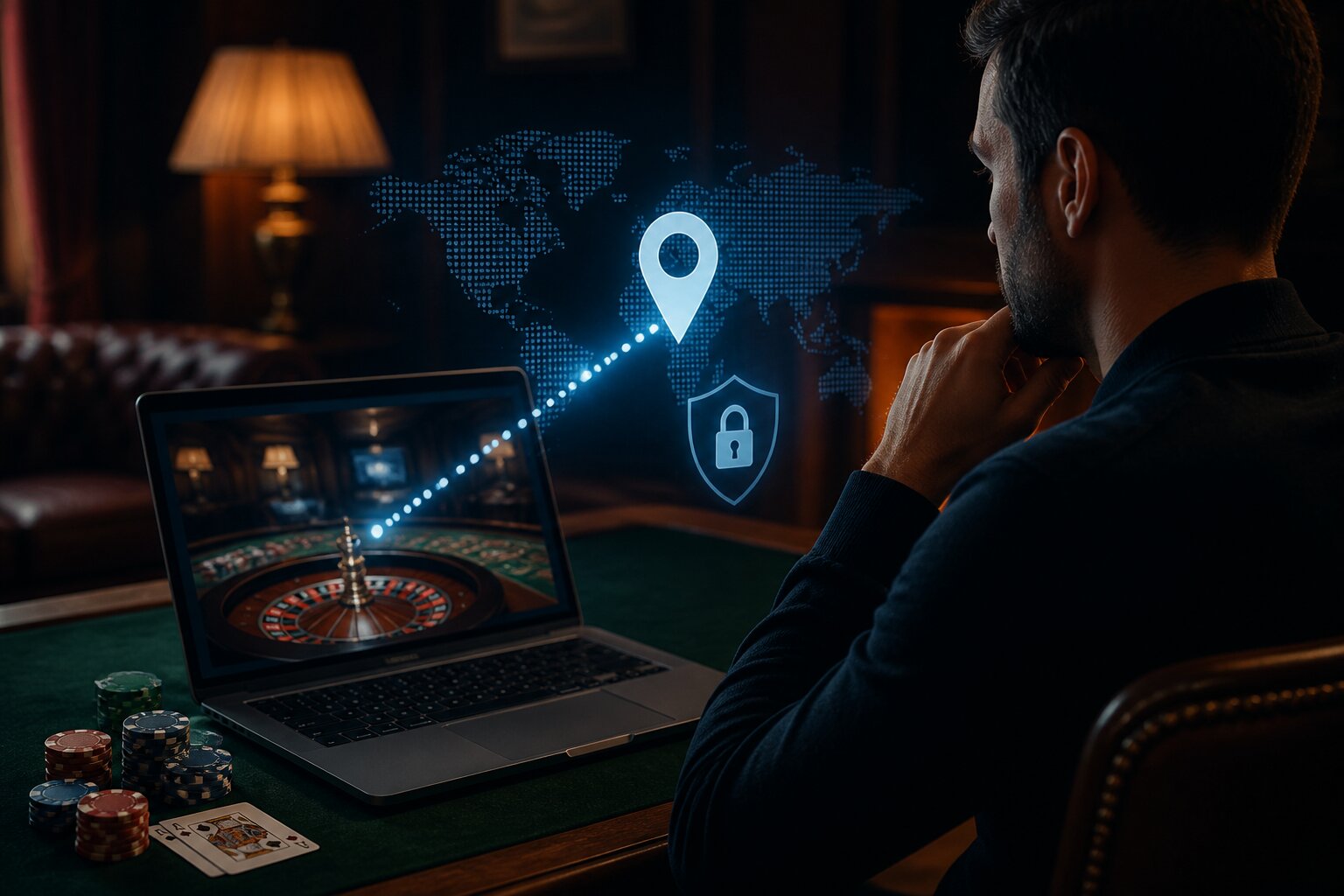
Ever wondered what happens when you log in to an online casino and hand over personal details and payment information? It is reasonable to want clear answers about how that data is used and who can see it.
This article explains what information casinos collect, why they collect it, and how that affects your privacy and security. Whether you play occasionally or often, the aim is to give you practical facts so you can make informed choices.
Read on for straightforward explanations, useful examples and sensible tips to keep your account and data safe.
How Do Online Casinos Use Your IP Address?
Casinos record IP addresses for reasons tied to safety, compliance and account integrity. One main use is to verify where a connection is coming from so the operator can offer services only in places where gambling is permitted. This helps the casino meet legal requirements and prevents unauthorised access from restricted locations.
IP data also supports fraud prevention and account security. Patterns such as frequent logins from unusual places, or payment attempts originating from different countries, can signal compromised accounts or suspicious behaviour that needs investigation. Tracking IPs contributes to transaction monitoring and helps detect attempts at money laundering.
Another practical use is to spot technical or operational problems: if multiple simultaneous logins come from the same network, or if there are repeated failed access attempts, the operator can take steps to secure accounts and assist players. These actions are about protecting both the individual account and the wider player community.
Casinos collect this information for legitimate, well-defined purposes rather than to monitor people indiscriminately. Next, we will look at why these checks are particularly important for ensuring safe play.
Why Do Casinos Need to Track IP Addresses?
IP tracking is a tool that supports several legal and operational obligations. It can help prevent underage access by identifying connections from regions where verification checks fail or where gambling is restricted. It also helps detect account sharing and other behaviours that breach terms of service.
Operators must address signs of harm or risky patterns in play, and technical data such as IPs forms part of the evidence used to identify potential issues. Meanwhile, anti-money laundering rules require firms to monitor account activity and flag unusual transactions; combining transaction data with IP history strengthens those checks.
All these uses are targeted and limited to maintaining lawful, secure and fair services. With those protections in mind, the next section explains what level of location detail an IP address actually reveals.
Can Your Location Be Determined from Your IP Address?
An IP address usually indicates a general location, commonly the country and sometimes the city. It does not reveal a precise home address. The accuracy depends on how internet service providers allocate addresses and on database records used for geolocation, so the result is never exact.
Casinos rely on this level of location information to decide whether a connection is permitted and to comply with local rules. If a region is restricted, the operator can block access or require extra verification before allowing play. This is a practical measure to ensure legal compliance and protect both the player and the operator.
Understanding this limits expectations about what IP data can do. With that clarity, the next section looks at how handling IPs affects player privacy under data-protection law.
What Are the Implications for Player Privacy?
IP addresses are classed as personal data under UK law, so operators must treat them with the same care as other identifiers. Data protection rules require transparency about what is collected, why it is needed and how long it is kept. Players should be able to find this information in a casino’s privacy policy.
Access to technical and personal data is restricted to staff who need it for compliance, account support or security investigations. Use of that data must be proportionate to the purpose—for example, verifying identity or investigating suspicious payments—and cannot be repurposed without consent.
Regulated operators are subject to audits and must demonstrate lawful data handling. They are not permitted to sell personal data or use it for unrelated profiling without explicit permission. These legal safeguards aim to balance the need for security with the right to privacy, and the next section explains the technical protections commonly applied.
How Do Online Casinos Protect Your Personal Data?
Casinos put multiple technical and organisational measures in place to reduce the risk of data being exposed. Encryption protects data while it is in transit between a player’s device and the operator’s servers, making intercepted traffic unreadable. Sensitive details are also stored on secured systems with controlled access and regular security testing.
Operational safeguards include staff training, role-based access controls and incident response plans to limit damage if a breach occurs. Licensed operators must meet the standards required by data-protection law and by gambling regulators, which expect documented policies and routine compliance checks.
While no system is infallible, combining strong technical controls with oversight and training reduces risks significantly. To lighten common concerns, the following section addresses frequent myths around IP tracking.
Common Myths About IP Address Tracking
There are a few persistent misunderstandings about what casinos can see and do with IP addresses, so it helps to separate fact from fiction.
Online Casinos Track Everything You Do
Some people assume operators can view all internet activity. In truth, casinos only have access to data that passes through their service: account details, transaction history and technical connection data such as IPs.
They can also log timestamps, device information and session details related to play on their platform. However, they do not have a window into general browsing or unrelated online behaviour on other websites or apps that are not connected to the casino.
Operators may combine the data they hold with other information for security and compliance purposes, but this is limited to what is collected through the service and lawful checks required by regulators.
Using a VPN Guarantees Complete Anonymity
A virtual private network can mask an IP address, but it does not remove regulatory obligations. Casinos have tools to detect VPN use and still require identity and location verification.
Using a VPN may therefore prevent access, trigger additional checks or result in account restrictions rather than providing total privacy. Providers must follow anti-money laundering and safer gambling rules, so attempts to conceal location can lead to delayed withdrawals or account suspension while further checks are carried out.
It is also worth noting that VPN use can affect connection stability and the accuracy of geolocation systems that operators rely on to ensure customers are in permitted jurisdictions. With those misconceptions cleared up, the next section outlines the main legal and regulatory considerations that shape how operators use data in the UK.
What Are the Legal and Regulatory Considerations in the UK?
UK operators must comply with data-protection legislation and gambling-specific rules that together set expectations for how personal information is processed. GDPR-style requirements mean data collection must be necessary, transparent and securely handled. Retention periods should be limited to what is required for the original purpose.
Anti-money laundering obligations require firms to monitor transactions, verify identities and report suspicious activity. This is where technical data such as IPs becomes part of an evidence set used to assess risk. The gambling regulator also mandates age verification and measures to identify players who may need support.
Regulatory oversight involves audits and the need to show policies and procedures are followed consistently. These legal requirements define both what operators must do and what players can reasonably expect in terms of privacy and safety.
Tips to Enhance Your Privacy When Gambling Online
There are practical steps you can take that improve privacy without compromising the checks operators must perform. Choose an operator that clearly explains its data-handling practices and provides obvious security features. Keep devices updated and protected with reputable security software so account credentials are less likely to be compromised.
Use strong, unique passwords and enable additional login protections when available. Read the privacy policy to understand what is collected and how long it is kept. Log out after each session on shared devices and avoid sharing personal details in public chat features or forums.
These measures help reduce risk while allowing the site to fulfil its legal duties. The final section brings together these points and explains how they fit into a trustworthy service model.
Conclusion: Balancing Security and Privacy at Online Casinos
Protecting players and meeting legal obligations requires collecting some technical and personal data, including IP addresses, but that collection is framed by strict rules and oversight. Operators use this information to verify location, prevent fraud and comply with anti-money laundering and age-verification duties, while technical and organisational safeguards limit who can access the data and how it is used.
Transparency, lawful processing and robust security practices are the foundations that make online play manageable and accountable. By understanding what is collected and taking sensible precautions on your side, you can participate with greater confidence, knowing both privacy and safety are actively being addressed.
**The information provided in this blog is intended for educational purposes and should not be construed as betting advice or a guarantee of success. Always gamble responsibly.