
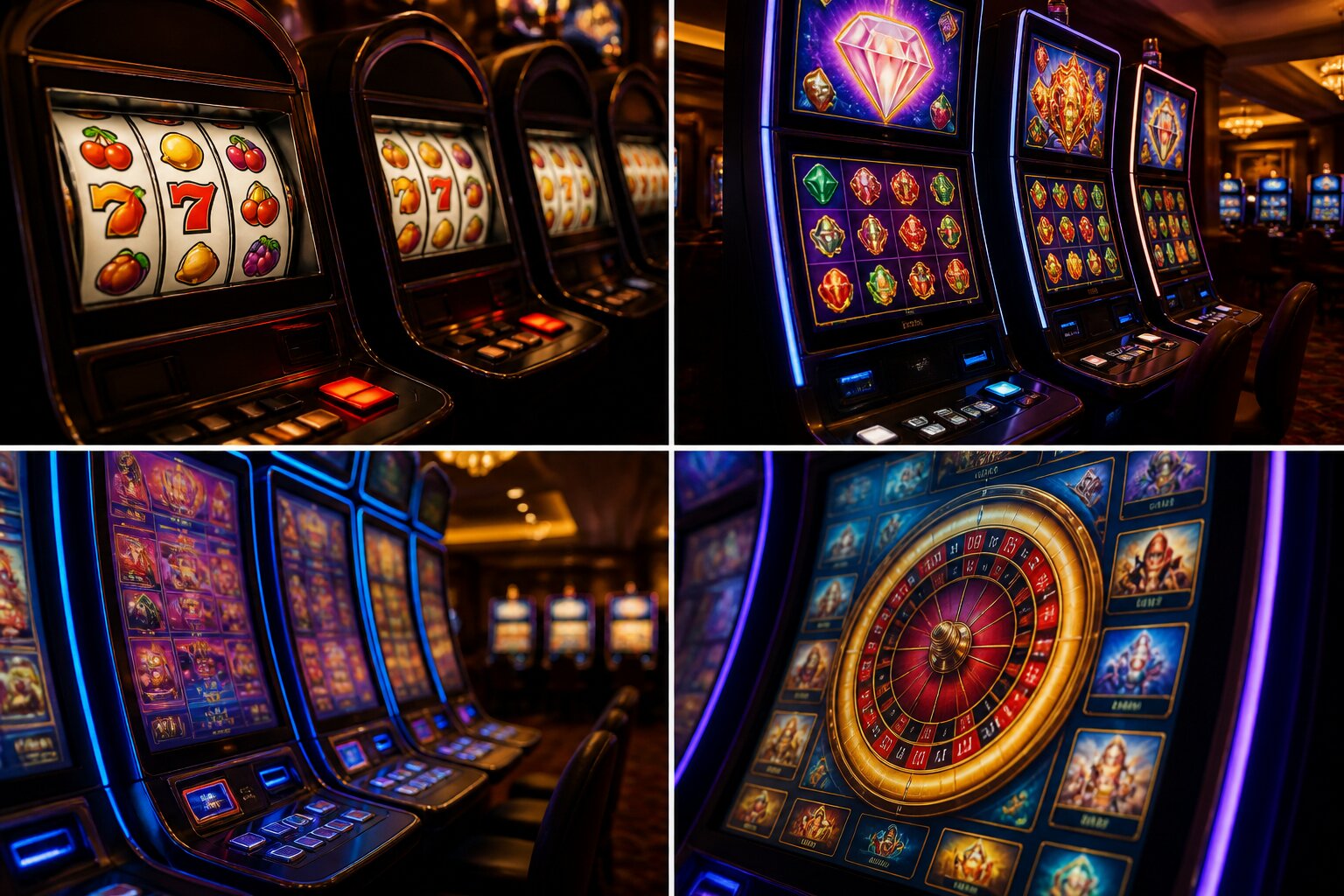
Ever stood in front of a row of slot machines and wondered which one suits you best? Some machines look pared-back and familiar, while others are busy with animations and extra features. There’s a surprising amount of variety, and understanding the differences makes choosing a game quicker and more enjoyable.
Whether you prefer a simple fruit machine in a local pub or a feature-rich online release, each type of slot carries its own set of rules, layouts and bonus mechanics. Read on to learn what separates the main categories, how jackpots and bonus rounds operate, and what to look for when picking a game.
Classic vs Video Slots: What Sets Them Apart?
Classic slots mirror the early mechanical machines once common in pubs and arcades. They typically have three reels, a small number of paylines and recognisable symbols such as fruit, bars and sevens. Gameplay is straightforward and easy to follow, with fixed payouts and little in the way of extra features. This simplicity is what many players appreciate: the focus is on direct outcomes and quick spins.
Video slots take a different approach, using five reels more often than not, along with richer graphics and more varied payouts. They commonly include wilds, scatters, free spins and separate bonus rounds that change the way the game plays. Some titles also build a theme or story into the experience, transporting players to settings from ancient history to outer space.
Payout structures tend to differ between the two. Classic slots usually offer fixed jackpots, while video slots are more likely to include layered prizes through bonuses. Next, we’ll look at the special case of progressive jackpots and how they build into larger prizes.
How Do Progressive Jackpot Slots Work?
Progressive jackpot slots pool a small portion of each wager into a growing prize fund. That pool accumulates across spins and, in networked versions, across multiple machines or sites. The jackpot increases until one player meets the specific win condition that triggers the prize — this might be a particular reel combination or a bonus-wheel outcome.
These jackpots are funded by contributions from many plays, which is why the top prize can swell to very large sums. The trigger conditions and the current jackpot amount are always shown in the game, and payout mechanics vary between titles. Some progressives are standalone, tied to a single game, while others are linked across many machines so each spin contributes to the same central pot.
Because the jackpot depends on a rare event, the chance of hitting it is very low compared with ordinary wins. Operators must display clear information about how prizes are awarded, and the game’s paytable explains the exact rules and triggering conditions. After the details of jackpots, it helps to understand the smaller-scale features that feature in modern slot design.
Bonus Features You’ll Find in Modern Slot Machines
Modern slots often layer interactive elements on top of their core spins to create variety. Common features include:
- Free spins: Triggered by landing a set number of scatter symbols, these rounds award extra spins without reducing the main balance. They often come with modifiers such as multipliers or added wilds.
- Wild symbols: Substitutes that help complete winning combinations. Variations include expanding wilds that cover a whole reel and sticky wilds that remain in place for several spins.
- Scatter symbols: These pay or trigger features regardless of their position on the reels, so they can award prizes without lining up on a payline.
- Bonus rounds: Mini-games or separate stages reached through specific combinations, often involving a wheel, a pick mechanism, or an alternate reel set with enhanced rewards.
- Mini games: Interactive elements such as pick-and-reveal features that give a brief change of pace and an opportunity for extra prizes.
These elements are designed to change the rhythm of play and create different paths to payouts. They do not alter the underlying fairness of a game; every outcome is determined by the game's random number generator and the rules shown in the paytable. Next, the article looks at how theme and design influence the player experience.
Theme & Design Variations in Slot Games
Theme and design shape how a slot feels long before a single spin lands. Some games lean into historical or mythical settings, while others use film or TV licences to create immediate recognition. Design choices include art style, music, sound effects and how features are presented — all of which affect immersion and pace.
Different themes suit different player preferences. An adventure-themed slot may present a narrative that unfolds through bonus stages, while a light-hearted, character-driven game focuses on approachable visuals and simpler mechanics. Design also governs clarity: well-designed games make it easy to see payline patterns and symbol values, whereas cluttered interfaces can slow a session down.
Regardless of the look, the odds and the game mechanics remain governed by the rules printed in the paytable. With design covered, the next section compares how those games appear and behave in physical venues versus online platforms.
Land-Based vs Online Slot Machines
Slots are available in both physical venues and online, and while the core mechanics are the same, the formats and options can feel very different.
Land-based machines are bound by physical space and hardware, which limits variety on a casino floor. They often use tried-and-tested themes and straightforward mechanics, making them easy to use in a social setting. Payout percentages can vary, and the visible presentation tends to favour that classic casino atmosphere.
Online slots offer a far wider selection of themes, reel formats and bonus mechanics, because digital platforms are not constrained by hardware. They also allow features such as demo modes that let players try a game without staking real money, and detailed play information — including return-to-player (RTP) figures — is usually accessible through the paytable. Certain advanced formats and networked jackpots exist only online, where software can connect many players into a single progressive networks.
Both formats operate under the same regulatory framework, which requires clear information about how games work and how prizes are awarded. With that practical difference in mind, the next section explains the technical building blocks of reels and paylines.
What Are the Key Differences?
There are a few notable distinctions between the two formats:
- Variety and accessibility: Online platforms can host thousands of titles and are available anywhere with an internet connection; physical casinos offer a smaller, more curated selection.
- Feature complexity: Online games tend to include more varied bonus mechanics and animated sequences; land-based machines often prioritise ease of use.
- Jackpot types: Some progressive networks exist only online because they require many players to contribute to a single pool.
- Information display: Online paytables typically provide clearer, more detailed RTP and feature descriptions, while physical machines may show only a summary.
Whether opting for a venue visit or an online session, understanding these differences can help pick a format that suits how you want to play. Now, let’s look at the mechanics that determine where wins land.
Understanding Paylines & Reel Formats
Reels and paylines determine how symbols line up and how wins are formed. Reels are the columns that spin and stop to display symbols; paylines are the specific patterns across those reels that constitute winning combinations.
Classic games commonly use three reels and a single straight payline. This simplicity makes outcomes easy to follow and is part of the charm for many players. Modern video slots expand on this with five reels and multiple fixed or selectable paylines that run in straight lines or zigzag patterns across the reels. Some games remove traditional paylines altogether and instead use “ways to win” systems where matching symbols on adjacent reels create payouts.
Innovations such as Megaways change the reel format by varying the number of symbols on each reel every spin. That variation multiplies the possible combinations and can produce thousands of ways to win on a single spin. Understanding the reel format and payline structure helps players see how a given bonus or wild might influence the potential for payouts.
By grasping how paylines and reels interact, players can better appreciate why different games feel and play the way they do, and make more informed choices about which titles suit their tastes. This final note brings the overview to a close and leaves you with a clear picture of what to expect from the main types of slot machines.
Play Online Slots at Slot Sites UK
We’d love you to join our friendly community of players at Slot Sites UK, where you can enjoy a welcoming, entertaining environment built around your enjoyment. Our site is all about being social, fun and easygoing, with no fuss.
Getting started is straightforward: simply create an account, make a deposit and you can begin exploring the games we have available. We look forward to welcoming you as part of our community.
**The information provided in this blog is intended for educational purposes and should not be construed as betting advice or a guarantee of success. Always gamble responsibly.