
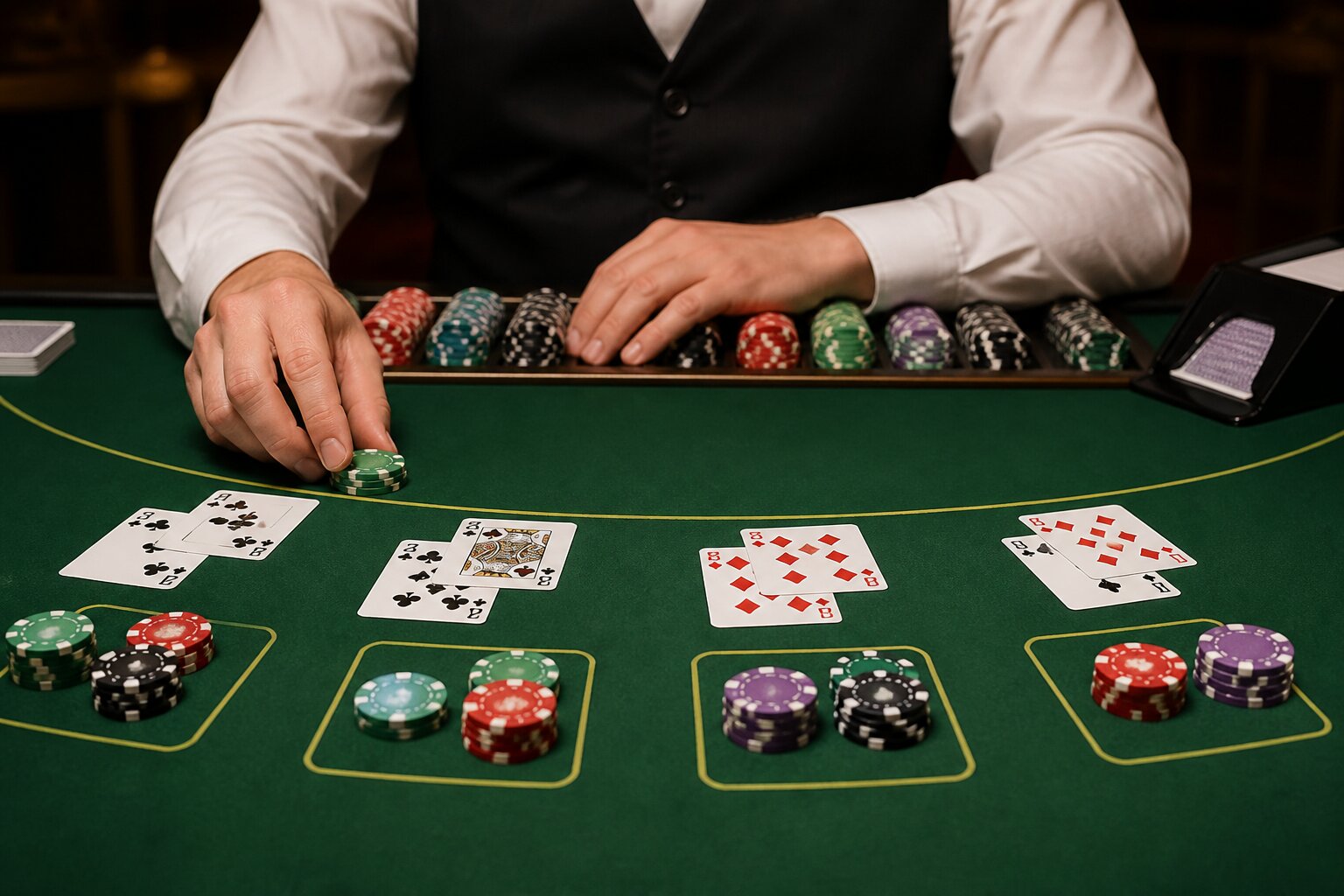
Ever found yourself watching a blackjack table and wondered why some players are juggling more than one hand at once? It can look exciting, but there are important rules and limits behind that choice.
Where you play determines the details — land-based casinos and online sites can set different limits and conditions. Knowing these rules helps you make better decisions at the table and keeps the experience straightforward.
Curious about how multiple hands work, whether it’s allowed everywhere, or what the casino limits are? Read on to get a clear picture before you take a seat at the blackjack table.
How Many Hands Can You Play at a Time in UK Casinos?
In most UK casinos, players are commonly allowed to play two or three hands at once. That’s a practical compromise: you gain variety and more decisions to make each round, while the casino keeps play manageable for dealers and other customers.
Casinos set their own policies, so limits can vary. Smaller venues or busy tables may restrict players to two hands; larger or quieter tables sometimes permit three. Online platforms may be more flexible, with some tables offering up to five hands — but this is determined by the specific game software and table rules.
Operational factors also influence limits. For example, table size, number of seats, and how the casino wants to pace the game can all affect the maximum hands allowed. It’s sensible to check the table rules or ask the dealer before you start so you’re certain what’s permitted.
If you plan to play multiple hands, bear in mind the extra commitment it represents: more hands means more bets and a faster drain on your bankroll. Keep that in mind when choosing how many hands to play.
Why Do Players Choose to Play Multiple Hands?
Players opt for multiple hands for a few clear reasons. One is variety: with two or three hands you can make different strategic choices in the same round, such as standing on one hand while hitting on another, which creates a different rhythm and decision-making process than playing a single hand.
Another reason is pacing. Playing several hands increases the number of decisions and outcomes per hour, which some players find more engaging. It also allows a player to spread bets across different hands, varying wager sizes to reflect confidence in particular situations or to hedge against a weak hand.
That said, playing more hands doesn’t change the underlying odds of each individual hand. Each hand is resolved independently under the same rules, so the overall balance between wins and losses is determined by the same probabilities you face when playing a single hand.
If you’re considering trying multiple hands, think about how it will affect your session: it can be more engaging, but it also requires quicker decision-making and stricter budget control.
House Rules for Playing Multiple Blackjack Hands
Every venue and game provider publishes house rules that explain how multiple hands are handled. These rules cover not only how many hands you may play, but also bet requirements, whether wagers must be identical across hands, and restrictions on doubling or splitting when multiple hands are active.
Some common house-rule variations include:
- Requiring the same stake on each hand, so you cannot vary bets between hands.
- Allowing doubling down only on the first two cards of each hand.
- Limiting which hands can be split when you hold pairs.
Online tables typically list these details in the game information or rules section. In a physical casino, the dealer or pit staff can confirm the specific policy before you sit. Checking in advance avoids surprises and helps you plan your play with confidence.
If a rule seems unclear, ask for clarification so you understand how decisions like doubling, splitting or surrendering will be applied when multiple hands are in play.
Casino Limits for Multiple Hands Explained
When you play more than one hand, betting limits apply to each hand separately. That means minimum and maximum stakes set at the table are enforced per individual hand rather than across your total bet for the round.
For example, if a table has a £5 minimum and you play three hands, the smallest total stake you can put down that round is £15. Likewise, a £100 maximum applies to each hand: you cannot place more than £100 on any single hand, even if you are playing several at once.
These per-hand limits keep play consistent for all players and help the casino manage risk. They also make it straightforward for you to calculate your exposure each round: multiply the per-hand wager by the number of hands to know your total stake.
Remember to factor these limits into your session planning so you understand how quickly your bankroll might be affected when playing multiple hands.
Minimum and Maximum Bet Requirements for Multiple Hands
The minimum bet is the smallest amount you can stake on any one hand. If the table minimum is £5 and you take three hands, you must place at least £5 on each hand, totalling £15 for that round.
The maximum bet works the same way: a £100 table maximum means you cannot wager more than £100 on a single hand, regardless of how many hands you play. The combined total of all hands simply reflects the sum of those individual bets.
Always check limits before sitting down or joining a table online, and plan your session around the total amount you’re comfortable risking in a single round.
Do Online Casinos Allow Multiple Hands in Blackjack?
Many online blackjack games let players play multiple hands, but the number available depends on the particular variant and the platform’s settings. Some classic single-deck or multi-deck tables offer two or three hands, while certain software versions allow up to five hands in one round.
The game’s information panel or rules page will state how many hands are permitted and any special conditions, such as whether bets must be equal across hands or whether specific options (like surrendering) are disabled when multiple hands are active.
Playing online has the advantage of clearly visible rules and transparent bet calculations, so it’s easy to see how much you’re committing each round. Make a habit of checking the rules screen before you start to avoid unexpected limitations.
If you prefer a steadier pace, you might choose single-hand tables; if you want more action per round and can manage the larger stake requirements, multi-hand tables can provide that.
Myths About Playing Multiple Hands in Blackjack
There are several misconceptions about multiple-hand play worth addressing so you can approach the option realistically.
Myth 1: Playing More Hands Increases Your Chances of Winning
Some players think more hands means better odds overall. In fact, each hand is resolved independently under the same rules and probabilities. Playing extra hands increases the number of results per round, but it does not change the expected outcome of any single hand.
Myth 2: More Hands Will Help You Beat the House
Another common belief is that multiple hands somehow diminish the house edge. The house edge is a feature of the game’s rules and payouts; it doesn’t change simply because you play more hands. Playing multiple hands can lead to greater variance in the short term, but it won’t alter the overall statistical advantage built into the game rules.
Staying clear about these points helps you make choices based on how you want to experience the game rather than on misconceptions. If you’re ever unsure, consult the table rules or ask a member of staff for a quick explanation.
Final note: play within your means and take regular breaks. If you want support or tools to manage your play, there are organisations and services that offer guidance and self-exclusion options to help you stay in control.
**The information provided in this blog is intended for educational purposes and should not be construed as betting advice or a guarantee of success. Always gamble responsibly.