
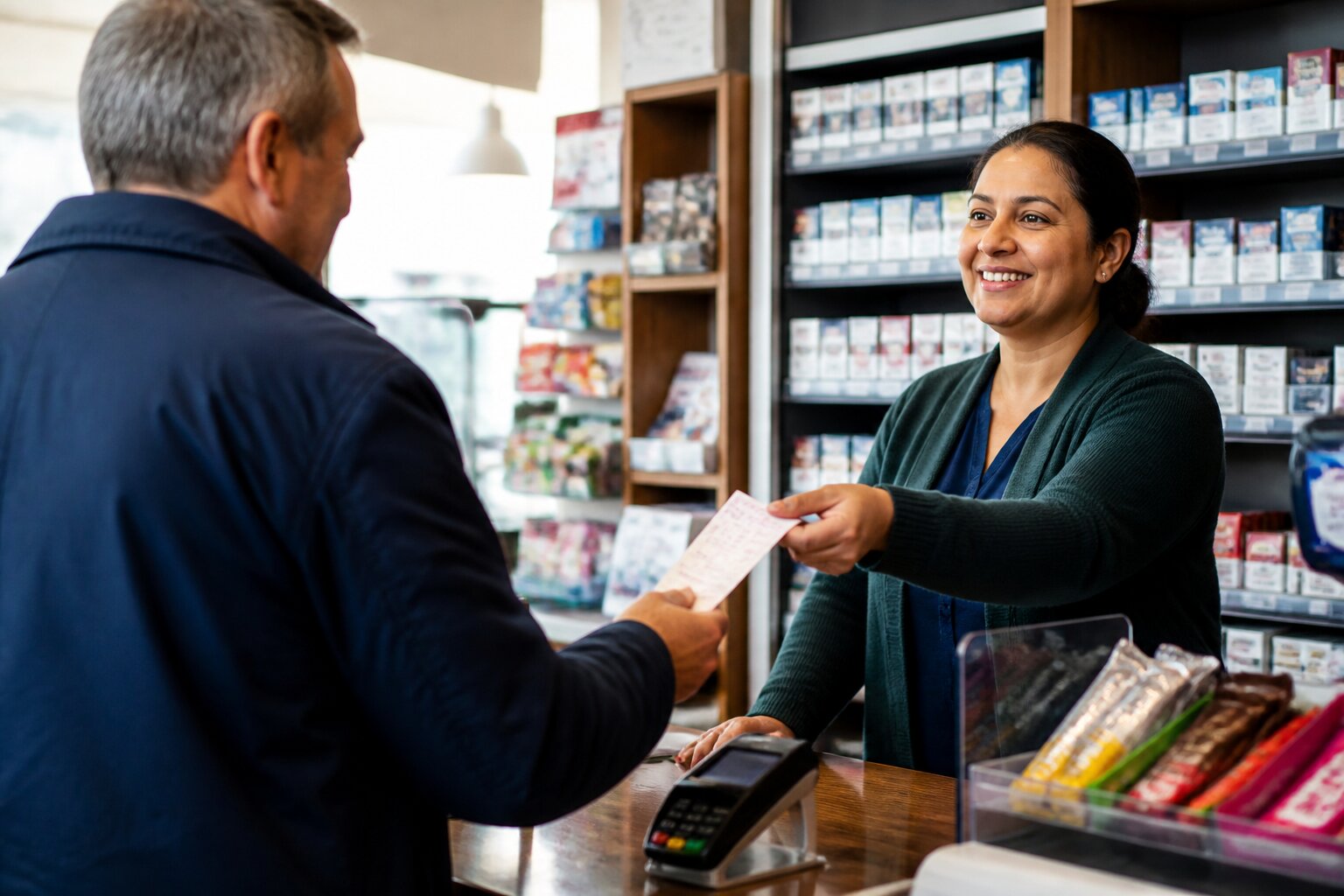
There is something familiar about picking up a lottery ticket at your local shop. For many people it is a small, ordinary part of a weekly routine — a ticket bought alongside groceries or fuel.
With more activity moving online, shoppers often ask whether tickets are still available over the counter. This article clears up how in-person purchases work, what to expect at the till, and the rules that apply.
Can You Still Buy Lottery Tickets in Shops?
Yes. National Lottery tickets and scratchcards are still sold in-person at newsagents, supermarkets, convenience stores and forecourt shops that operate authorised lottery terminals. Retailers typically sell draw-based games such as Lotto, EuroMillions, Thunderball and Set For Life, together with a range of instant-win scratchcards.
You must be 18 or over to buy a ticket; staff may ask for ID if your age is uncertain. Shops can sometimes run out of specific scratchcards or have a temporarily out-of-service terminal, but frontage-level availability is widespread. Tickets for a given draw can usually be bought up until the published cut-off time on draw nights; purchases after that point will be entered into the following draw.
If you want to know where to look on the high street, the next section outlines the kinds of shops that commonly sell tickets and what to expect when you go in.
Where Can You Buy Lottery Tickets on the High Street?
Lottery products are widely available across the high street. Larger supermarkets commonly sell tickets at customer service desks or tills. Local newsagents and independent corner shops often display the lottery logo and keep scratchcards and draw entries behind the counter. Petrol forecourts and convenience stores also frequently offer terminals next to the checkout.
Availability can vary between branches because of local demand, licensing arrangements or short-term operational issues. The best visual cue is the National Lottery branding at the entrance or by the till. If you prefer a printed ticket in your hand, these in-person outlets remain the most straightforward option, and many make a trip to buy a ticket quick and convenient.
How Much Do Lottery Tickets Cost in Shops?
Ticket prices are set by the lottery operator and mirror online pricing, so you should expect the same costs whether you buy in a shop or via the operator's website or app. The operator publishes the prices, which are applied uniformly across retail outlets.
Typical prices are:
- Lotto: £2 per line
- EuroMillions: £2.50 per line
- Thunderball: £1 per line
- Set For Life: £1.50 per line
Scratchcard prices vary by game and format, commonly ranging from £1 to £5. The price is clearly printed on each card and displayed at the till, so you can check before you buy. Retailers are required to sell scratchcards at the published price, and any changes to pricing are managed centrally by the operator rather than by individual shops.
When buying in person you will normally receive a paper ticket or scratchcard and a receipt for your purchase, which you can use to check your numbers or to claim prizes. Retailers must also carry out age verification, so you will need to be 18 or over to purchase lottery tickets in-store.
If you are considering whether to buy in-store or online, the following section compares the two options and explains the practical differences. Please play responsibly and remember that lottery play is for adults only.
What Identification or Requirements Are Needed?
Buyers must be 18 or over, and retailers often operate a Challenge 25 approach, meaning staff will ask for ID if a customer appears to be under 25. Acceptable forms of identification typically include:
- Passport
- UK or EU photocard driving licence
- PASS card (Proof of Age Standards Scheme)
- National identity card (where applicable)
Staff are trained to refuse a sale if valid ID cannot be provided. These checks are part of the regulatory safeguards that protect both customers and retailers.
Understanding these safeguards helps when choosing between buying in-person or online, so the next section looks at the key differences in convenience, payment and claiming winnings.
Comparing In-Store vs Online Lottery Purchases
Both in-store and online options operate under the same regulatory framework and offer secure ways to play, but they differ in practical terms.
In-store purchases give you a physical ticket and suit people who prefer paying in cash or want an immediate printed receipt. Shop opening hours and queues can limit timing, and small prizes can often be claimed directly from the retailer.
Online play lets you buy entries at any time, with tickets stored digitally in an account. Payment is usually by debit card and winnings up to a threshold are credited to your account quickly. Larger prizes require verification and direct contact from the operator. Online accounts reduce the risk of losing a ticket and provide notification by email or app.
Both routes require age verification and follow the same claims processes for larger prizes. Whether a physical ticket or a digital record is preferable depends on convenience and personal preference, and the next section explains why a shop might stop selling lottery products altogether.
Why Might Some Shops Stop Selling Lottery Tickets?
There are pragmatic reasons why a shop might cease selling lottery products. Operating a terminal entails costs and administrative duties, and retailers will consider sales volume and profitability when deciding whether to keep the service. Licensing and compliance also matter: retailers must meet the operator’s standards and maintain their authorisation to sell tickets. If a licence is surrendered, revoked or not renewed, sales must stop.
Local factors may influence the decision too, such as council licensing terms, changes in store ownership, or a refocus on other product lines. Short-term reasons—like refurbishment or technical faults with terminals—can also lead to temporary suspension of sales. These measures are part of ensuring responsible, legal operation across the retail network.
The Bottom Line: Buying Lottery Tickets in Shops
Buying tickets in shops remains an easy and widely available option. High street outlets continue to provide draw entries and scratchcards, with rules in place to verify age and protect customers. Ticket prices follow the operator’s published rates, and small prizes can often be collected at point of sale while larger prizes involve a formal claims process.
Deciding where to buy depends on whether you value a printed ticket or the convenience of a digital record. Wherever you choose to play, the safeguards and verification processes ensure transactions are conducted within the regulated framework and with consumer protection in mind.
**The information provided in this blog is intended for educational purposes and should not be construed as betting advice or a guarantee of success. Always gamble responsibly.