
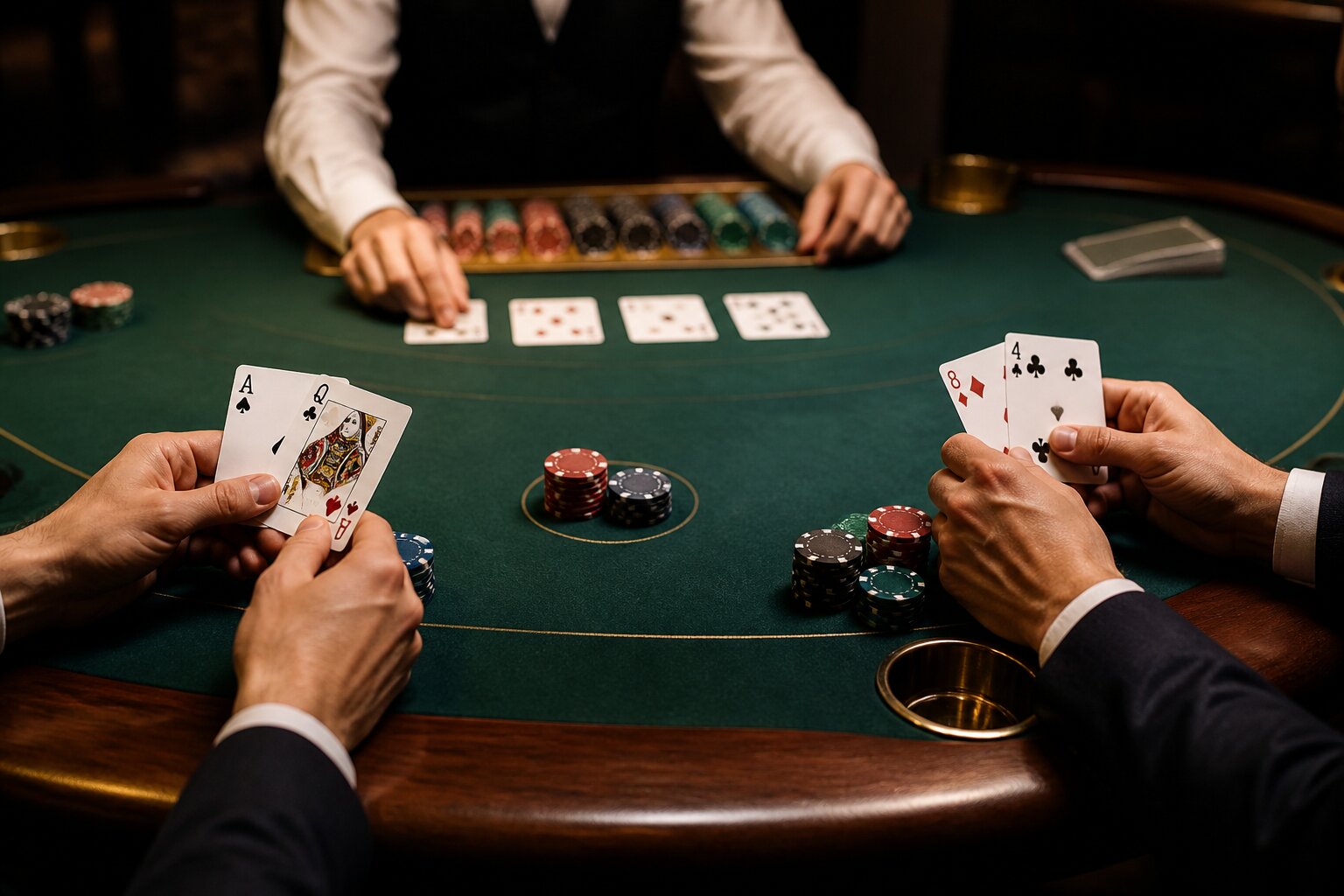
Ever wondered how some blackjack players seem to get an edge at the table? You might have heard about Blackjack Switch — a distinct twist on the classic game that changes how decisions affect each round.
If you’re curious why this variant is appearing more often online, and how it alters the usual rules and payouts, this guide will take you through the key differences and what to expect when you play. Fancy switching things up and seeing which version suits your style?
Read on to compare both games side by side and decide which one fits you best.
What Is Blackjack Switch?
Blackjack Switch is a modern variation created in the early 2000s that lets a player manage two hands simultaneously. At the start of a round you receive two separate hands and have the option to swap the second card of each hand with the other. That single rule opens up different strategic choices compared with classic blackjack and can change the kinds of hands you play for.
To keep the house edge in balance, Blackjack Switch pairs that swapping option with other rule changes. A notable example is the dealer-22 rule: if the dealer’s cards total 22, most player hands (except natural blackjacks) push rather than win. These adjustments are part of what makes Switch feel different while still being a familiar card game.
If you’re new to it, the swapping choice is the core thing to understand first, because it directly influences whether you try to build strong hands across both positions or concentrate your chances on one.
How Does Classic Blackjack Work?
Classic blackjack is straightforward in structure but rich in tactical choices. Each player and the dealer are dealt two cards. Number cards count at face value, face cards count as 10 and Aces can be 1 or 11 depending on which value improves the hand without going over 21.
Players decide how to proceed with their hand by choosing options such as hitting for another card, standing on their current total, doubling down to increase the stake while taking one final card, or splitting a pair into two separate hands. The dealer reveals their hand later and follows a fixed set of rules — typically drawing until at least 17 — which removes discretion from the dealer’s play and makes outcomes easier to evaluate.
A natural blackjack (an Ace plus a 10-value card on the initial deal) commonly pays 3:2, while standard winning hands pay even money. If your hand exceeds 21 you bust and your stake is lost; if both you and the dealer have blackjack, the result is a push.
Understanding these basics makes it easier to grasp how Blackjack Switch modifies the flow of the game.
Key Rule Differences Between Blackjack Switch and Regular Blackjack
While both games share the basic goal of building a strong hand without exceeding 21, several rules set Blackjack Switch apart from classic blackjack. These differences change the way you approach decisions, affect risk distribution and alter expected payouts.
Number of Hands
Blackjack Switch deals two hands every round, whereas classic blackjack normally involves a single hand per bet unless you choose to split. Playing two hands at once means you must think about how each decision affects both hands, not just one.
This simultaneous play changes risk management. You can hedge one hand against the other, but you also expose more of your stake to the table each round.
Card Switching
Switching the second card between your two hands is the signature move in Blackjack Switch. In classic blackjack there is no swapping; choices are limited to hits, stands, doubles and splits.
The ability to exchange cards can convert two mediocre hands into one strong hand and one weaker hand, or into two playable hands. That option creates different strategic priorities compared with classic play.
Decks Used
Both variants commonly use multiple decks. Blackjack Switch often appears with six or eight decks, while classic blackjack can range from one to eight decks depending on the house rules.
Greater deck penetration and the number of decks in use influence the probabilities of specific cards appearing. That in turn affects decisions such as hitting or standing, and it alters the relative value of switching.
Dealer’s 22 Rule
In Blackjack Switch, a dealer total of 22 generally results in pushes for player hands, except where a player has a natural blackjack. In standard blackjack, any dealer total over 21 usually means remaining player hands win.
This rule is one of the main adjustments that offsets the advantage granted by card switching. It reduces the net benefit of otherwise favourable exchanges and changes the expected outcome of marginal hands.
Blackjack Payouts
Payouts differ between the games:
- Classic blackjack typically pays 3:2 for a natural.
- Blackjack Switch commonly pays 1:1 for naturals and applies the 22-push rule.
These payout structures materially affect the relative house edge and should be taken into account when choosing which game to play.
Each of these rule changes interacts with the others, so a decision that looks correct under classic rules may look different in Blackjack Switch. The next sections explain how these differences affect winnings and the overall player experience.
What Are the Payouts for Each Game?
Payouts depend on the specific game rules at the table you choose, but there are standard approaches for each variant that you’ll commonly encounter.
Classic Blackjack
A natural blackjack usually pays 3:2, so a £10 stake returns £15 in winnings plus the original stake. Standard wins pay even money, meaning a £10 win returns £10 plus your stake. Ties with the dealer result in a push, where your stake is simply returned and no win or loss is recorded.
The relative generosity of the natural payout is one reason classic blackjack can offer a lower house edge under favourable rules. Always check whether the table truly offers 3:2 for naturals, as some games use alternative payouts that change the maths.
Blackjack Switch
Most versions of Blackjack Switch pay 1:1 for a natural, not 3:2, so a £10 winning natural returns £10 plus the stake. Regular wins also pay even money. The dealer-22 push rule further reduces player returns relative to classic blackjack: when the dealer reaches 22, most player hands neither win nor lose.
Because of these adjustments, the overall payout picture in Switch reflects the compensation for the additional strategic option of swapping cards. That swap can create stronger hands more often, but the reduced natural payout and the 22 push rule balance that advantage.
Check the paytable and rules at the table you’re playing to confirm exact payouts — small differences in rules can change the maths and therefore the most sensible approach to each hand.
Player Experience: Which Game Is Easier to Learn?
Classic blackjack tends to be more straightforward to pick up because the decision set is smaller and each round centres on one hand. New players can quickly learn the basic options and the typical dealer rules.
Blackjack Switch introduces an extra layer: you evaluate two hands and decide whether swapping the second cards improves your combined position. That choice requires assessing multiple outcomes at once, which some players find engaging and others find mentally demanding. The learning curve is a little steeper, but once you understand the implications of the 22-push and the altered payouts, the gameplay becomes intuitive.
Casinos often provide help screens or demo versions for both games. Trying each without risking money is a good way to see which pace and decision-making style you prefer before staking real funds.
Common Myths About Blackjack Switch and Blackjack
A number of misleading ideas circulate about both games. Clearing these up helps set realistic expectations.
One myth is that switching cards in Blackjack Switch guarantees better results. While swapping gives an extra option, the game’s rules — such as the dealer-22 push and reduced natural payout — are designed to balance that choice, so outcomes won’t always favour the player.
Another misconception is that perfect strategy can always overcome the house. Strong play can improve expected returns, but the randomness in how cards are dealt means outcomes vary from round to round; no strategy ensures consistent winning streaks.
Some people assume blackjack is purely a game of skill. There is an element of skill in decision-making, but uncertainty in card distribution affects every hand. Finally, the idea that you can recoup losses simply by playing longer is risky; extended play often increases exposure to the house edge rather than reversing results.
Understanding the rules and how they interact gives you a clearer picture of what to expect and helps you make measured choices while playing.
Which Version Offers Better Odds?
The two games present different house edges because of their distinct rules. Classic blackjack, under favourable rules, can offer a lower house edge — often around 0.5% to 1% — depending on factors such as deck count and dealer behaviour on soft 17. Blackjack Switch generally shows a slightly higher house edge, commonly in the region of 0.6% to 1.5%, largely due to the 22-push rule and the reduced payout for naturals.
Those ranges are guides, not promises. Small rule changes, like whether the dealer hits or stands on soft 17 or variations in how doubles and splits are handled, can shift the edge significantly. If you’re mathematically inclined, comparing specific rule sets side by side helps identify which tables offer the most favourable expected returns.
Either way, understanding the relative odds can steer you toward the version whose balance of risk and choice best matches your preferences.
Choosing Between Blackjack Switch and Blackjack
Picking between the two depends on how you like to play. If you enjoy making extra decisions and evaluating two hands together, Blackjack Switch offers a distinctive strategic layer. If you prefer simpler rounds with a lower natural payout advantage, classic blackjack is a solid choice.
Try both in demo mode if that’s available, so you can feel how each game flows without any risk. Think about whether you value the potential tactical depth of Switch or the more familiar structure of classic blackjack.
Set sensible limits for time and money before you play, and make choices that fit your budget and comfort level. If you ever feel uncertain about your play, support is available from organisations like BeGambleAware.
Whichever game you try, approach it as entertainment: know the rules, watch how small rule differences affect outcomes, and pick the version that suits your style.
**The information provided in this blog is intended for educational purposes and should not be construed as betting advice or a guarantee of success. Always gamble responsibly.