
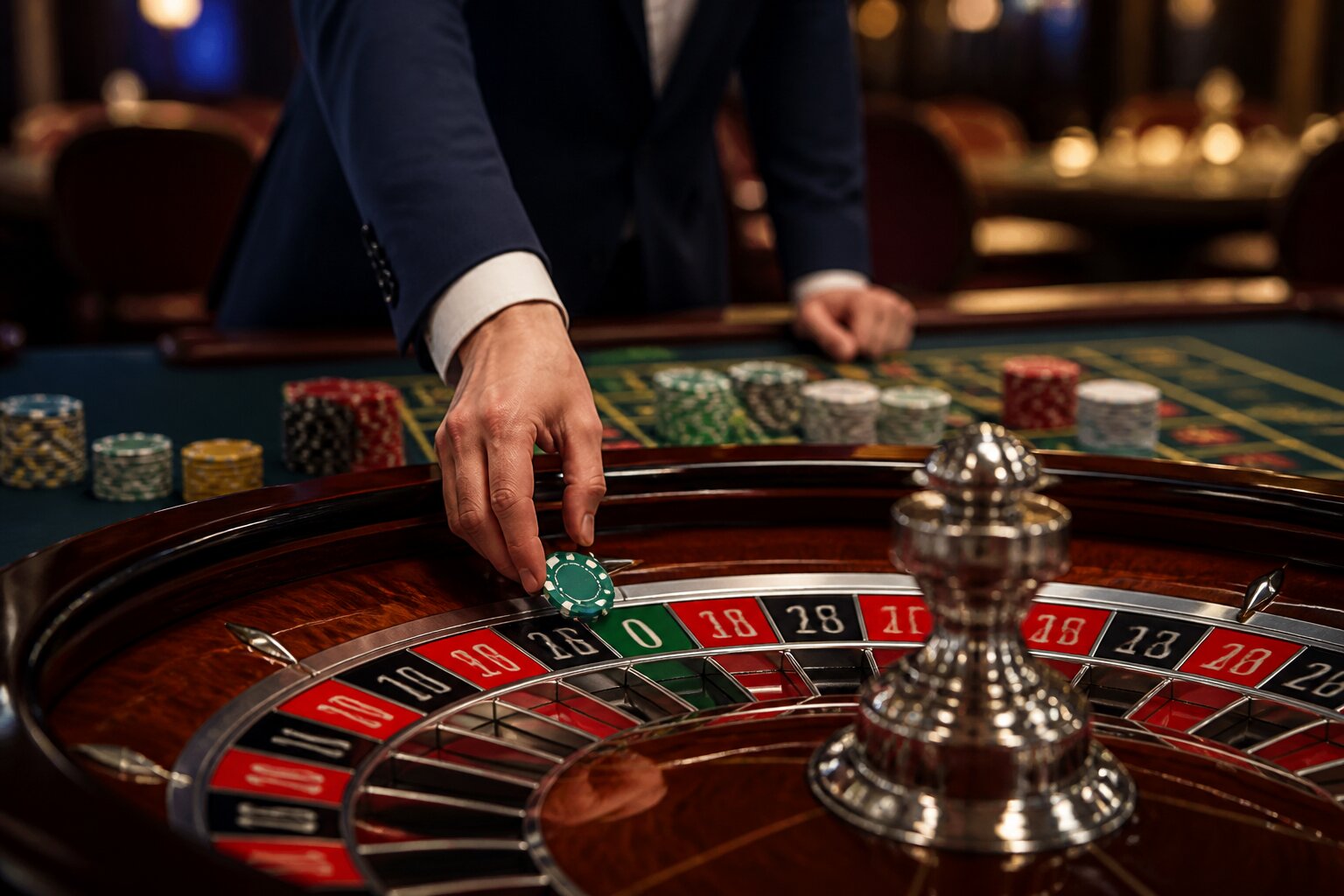
Have you ever wondered why the green zero on a roulette wheel attracts so much attention? Some players favour it, others avoid it, and a number of myths have grown up around that single pocket.
Does betting on zero change the odds or offer some hidden benefit? This article separates fact from fiction and explains the practical reasons players might choose zero.
Read on to follow a clear, step-by-step look at what the zero pocket does, the common misunderstandings about it, and how it affects betting choices.
Understanding the Zero Pocket in Roulette
The zero pocket is the single green space that separates roulette from many other casino games. On a European wheel, there are 37 pockets numbered 0 to 36; the zero is neither red nor black and is not counted as odd or even. American wheels add a second green pocket marked 00, which changes the math for every bet on the table.
That single green number is the reason the house has an edge. In European roulette that edge is roughly 2.7%, while in the American version it rises to about 5.26% because of the extra 00. The zero also alters the outcome of many common wagers: when the ball lands on zero, outside bets such as red/black or odd/even typically lose, whereas a straight bet on zero pays out.
These practical details matter for anyone trying to understand how bets perform at the table; next we’ll look at the widespread myths that often mislead players.
Common Roulette Myths: Is Zero Really Special?
Zero has a reputation that outstrips its actual effect on the game. Many beliefs about the green pocket are rooted in misunderstandings about probability and how roulette spins operate. Clearing these up helps with clearer decision-making and a more realistic sense of what to expect when playing.
Myth: The Zero is Due to Hit
A familiar mistake is to assume zero becomes more likely after a run of other results. Each spin is an independent event, so the probability of zero on a European wheel remains 1 in 37 on every spin. There is no mechanism by which the wheel “remembers” previous outcomes, so no number is ever more or less likely because of past results.
Players sometimes call this the gambler’s fallacy. It is natural to see patterns in sequences of numbers, but those patterns do not change the underlying maths. Whether zero has not appeared for many spins or has appeared several times in a row, the chance on the next spin does not alter.
Myth: Zero Bets Always Offer the Best Return
Another mistaken idea is that betting on zero gives superior returns. A straight-up bet on any single number, including zero, pays 35 to 1. That payout is the same across all individual numbers, and it does not change the underlying odds that make up the house edge. Choosing zero is therefore a matter of preference, not a mathematically stronger option.
Beyond the equal payout, the expected value of a single-number bet reflects the built-in advantage for the house. Over many spins the average outcome favours the casino, regardless of whether players back zero or any other number. For those seeking entertainment, some players choose zero because it stands out visually or feels significant, but that choice does not alter the long-term probabilities.
Why Do Players Bet on Zero?
Several practical and psychological reasons explain why players sometimes single out zero. For some, the payout structure or table rules make bets involving zero attractive; for others, the number’s distinctive colour and status on the wheel give it an appeal of its own.
Unique Payouts for Zero
A straight bet on zero pays 35 to 1, the same as any single-number bet. Players can also place combination bets that include zero—splits, trios and corners have different payouts because they cover multiple numbers, but these follow the standard rules of roulette. The payoff mechanics mean zero is simply one more target that can produce the large single-number return if it comes in.
Table Rules and the Zero Bet
Some European tables use rules that soften losses when zero appears on even-money bets. Under the la partage rule, an even-money stake loses only half its value if the ball lands on zero, and under en prison the bet can be held for the next spin rather than lost immediately. These variants reduce the effective house edge on even-money wagers in certain situations, which is why players attentive to rules might prefer tables that apply them.
Table rules can change how appealing certain bets feel; understanding them helps explain why zero-related wagers sometimes feature in players’ strategies, and the next passage examines the non-mathematical reasons zero attracts attention.
Psychological Factors in Choosing Zero
Beyond payouts and rules, the zero pocket has psychological pull. Its singular colour and role on the wheel make it stand out, and that distinctiveness can influence choices. Some players favour zero because it symbolises difference or because they prefer making less common selections. Others are drawn by the prospect of a large payoff from a single number, even though the statistical odds are the same for any straight bet. These human factors often shape behaviour at the table in ways that probability alone does not predict.
Having looked at why players choose zero, it’s important to see exactly how that green pocket alters the odds and outcomes across different types of bets.
How Does the Zero Affect Roulette Odds?
The presence of zero reduces the success rate of nearly every standard bet. On a European wheel there are 37 pockets, so a straight bet wins 1 time in 37; on an American wheel there are 38 pockets, so a straight bet wins 1 time in 38. The fixed 35 to 1 payout for a straight bet does not match the true odds, and that discrepancy is the source of the house edge.
Even-money bets are affected because they cover 18 of the numbered pockets but not the zero(s), which lowers the chance of success below 50%. In practice this means red/black or odd/even pay the same when they win, but do so less often than an even split would suggest. The extra 00 on American wheels amplifies these effects, which is why many players prefer single-zero tables where rules and probabilities tend to be more favourable.
Understanding these shifts in probability clarifies why different players opt for different betting approaches; next we consider whether betting on zero is a good fit for various types of players.
Is Betting on Zero a Good Idea for All Players?
Whether zero is suitable depends on a player’s objectives and tolerance for infrequent, larger wins. For those willing to risk longer losing stretches in return for a bigger single-number payoff, a straight bet on zero can be an understandable choice. Players seeking steadier returns typically favour even-money bets or other wagers that pay out more frequently, albeit for smaller sums.
No system can alter the fundamental maths of the wheel, so expectations should be aligned with probability: single-number wins are rare but substantial, while outside bets pay more frequently but for smaller amounts. It is sensible to set personal limits and decide stakes that match one’s own financial comfort and entertainment goals. If anyone needs support with gambling-related concerns, resources such as GambleAware provide information and help.
To sum up, zero is an integral part of roulette that shapes the house edge and player choices. It is neither a secret advantage nor merely superstition; its influence is a mix of rule effects, payout structure and human behaviour. If you explore different tables and rules, you can choose the approach that best fits how you want to play.
Play Casino Games Online at Slot Sites UK
At Slot Sites UK, we’re proud to offer a wide world of casino entertainment, all in one place. Explore an impressive variety of options and enjoy the freedom to choose how you like to play.
Getting started is straightforward—simply create your account, make a deposit and you’re set to discover everything our site has to offer. We look forward to welcoming you.
**The information provided in this blog is intended for educational purposes and should not be construed as betting advice or a guarantee of success. Always gamble responsibly.