
When you play blackjack, the way winning blackjacks are paid changes how much you get back and affects your results over many hands. Some tables pay 3:2 for a natural blackjack, while others use 6:5 — a difference that might look small but matters in the long run.
This guide explains what those numbers mean, how they alter the house edge, and what that means for your bets in plain, practical terms. Read on to make sharper choices when you pick a table.
What Is the Difference Between 3:2 and 6:5 Blackjack?
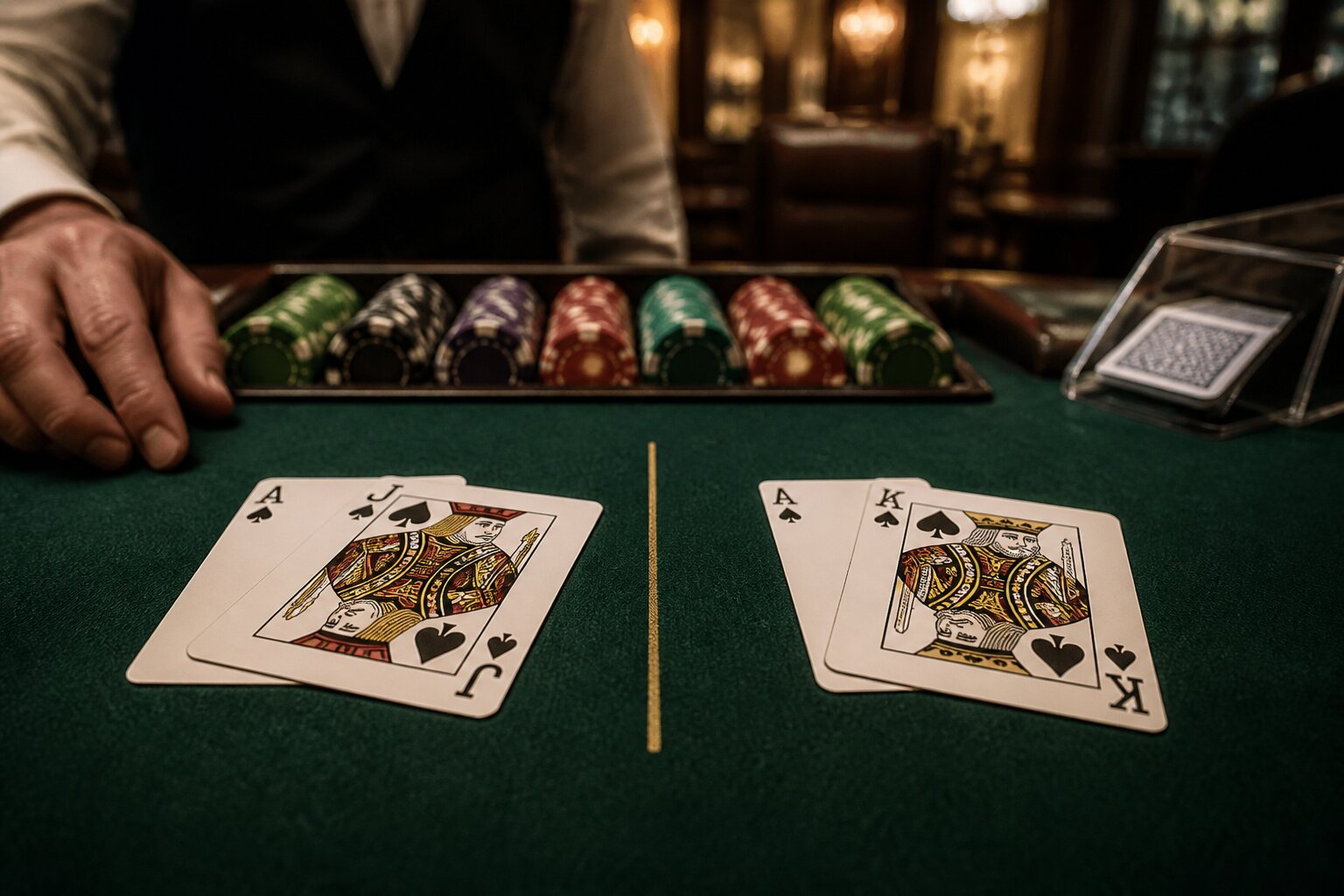
The key distinction is the payout for a natural blackjack, which is an Ace paired with a ten-value card on the initial deal.
In 3:2 blackjack, a natural pays £3 for every £2 wagered, so a £10 stake returns £25 in total (£10 stake plus £15 winnings). In 6:5 blackjack, a natural pays £6 for every £5, so the same £10 stake returns £22 (£10 stake plus £12 winnings).
The rest of the game — hitting, standing, splitting, and pushes — follows the same rules in both versions. Only the payout for that opening two-card blackjack changes, but because that outcome occurs fairly often relative to other results, its payout has a noticeable effect on longer-term player returns.
How Do 3:2 and 6:5 Payouts Affect Your Winnings?
Payout differences show up when you tally returns across many hands. Using the £10 example makes the point: a 3:2 payment gives £15 for a natural, while 6:5 gives £12. Those extra few pounds per blackjack add up over time and can materially change your net result.
Remember that only natural blackjacks are affected by these ratios; standard wins and pushes are settled in the usual way. Because the frequency of naturals is built into the game’s probabilities, the change in payout directly shifts expected returns, not the game’s playability or rules.
While short sessions can produce varied outcomes, the mathematical effect of the different payouts becomes clearer the more hands you play.
Understanding the House Edge in 3:2 vs 6:5 Blackjack
House edge is the casino’s long-term expected profit expressed as a percentage of wagers. It depends on the rules in force, including the blackjack payout.
Under common rules with basic strategy, a 3:2 payout typically corresponds to a house edge close to 0.5%. Switching to 6:5 increases that edge; industry estimates often place it near 1.9% under equivalent conditions. In simple terms, the casino keeps more of the money wagered, on average, when naturals are paid at 6:5 instead of 3:2.
This difference matters if you care about expected losses over large numbers of hands. For someone strictly focused on minimising the house’s advantage, tables paying 3:2 are the stronger option.
To see the effect in context, think about how small percentage points compound across many bets: even a change of one or two percentage points in edge changes cumulative expected losses noticeably over time.
Why Do Some Casinos Offer 6:5 Blackjack Payouts?
Operators choose payout structures for commercial reasons. Offering 6:5 allows casinos to present more tables with different limits or branded variations while increasing their average return from blackjack.
From a player’s perspective, this is a trade-off between variety and value. Some venues keep classic 3:2 tables for traditionalists, while others promote faster or themed games that pay 6:5. The gameplay and decision-making remain the same; the difference is in how much a natural blackjack is worth.
If you prefer to maximise expected returns, prioritise tables that pay 3:2. If you’re exploring different game styles, check the payout information before you join to make an informed choice.
Do 6:5 Blackjack Tables Offer Better Odds for Players?
No. Changing the payout to 6:5 does not improve a player’s odds; it reduces the value of a natural blackjack and raises the house edge compared with 3:2, assuming other rules are equal. The relative frequency of winning hands and the strategic choices players make remain the same across both payout types.
The practical effect is that a natural blackjack is worth less in cash terms under 6:5 than under 3:2. In other words, when you do get a blackjack you receive a smaller reward, even though the chance of getting one is unchanged. Over many hands this lower payout translates into a higher long‑term cost to the player.
Choosing the better option comes down to comparing the maths. Consider these points:
- 3:2 pays 1.5 times your stake on a natural blackjack, while 6:5 pays 1.2 times.
- That reduced payout under 6:5 increases the house edge compared with an equivalent 3:2 game.
- All other things being equal, the lower payout means you will lose more money on average over a large number of hands.
If you have the choice at the table, a 3:2 game is generally the better option for players because it preserves more of the value of naturals and keeps the house edge lower.
Common Myths About 6:5 Blackjack Odds
Several misconceptions surround 6:5 blackjack, and separating fact from fiction helps you choose sensibly.
Common myths include:
The idea that 6:5 makes the game more player-friendly. In fact, paying 6:5 for a natural reduces the expected return to the player compared with the traditional 3:2 payout. That reduction may look small on a single hand but it increases the house edge over time.
The belief that certain betting patterns or systems can offset the weaker payout. Mathematical analysis shows no betting system removes the extra house edge created by the payout change; betting systems change the distribution of wins and losses but do not change long-term expected return.
The notion that table promotions or card shuffles somehow restore fairness. Offerings that look different from standard blackjack often maintain rules that benefit the operator overall, even if they include attractive-sounding features.
Variations and side bets may appear attractive at first glance, but they are typically structured to increase the operator’s margin rather than improve the player’s odds. These options often have larger variability and a higher expected loss per unit staked than main-hand bets.
Understanding these points helps you judge a table on objective terms instead of marketing or hearsay. Looking at the payout and the basic rules gives a clearer sense of the likely long-term cost of playing than relying on anecdotes or perceived short-term luck.
Should You Play at a 3:2 or 6:5 Blackjack Table?
The practical choice is straightforward: if your priority is the best expected value, favour 3:2 tables. If you want to try a novelty or a specific table that happens to offer 6:5, be aware that you are trading some expected return for that experience.
Consider table limits and how many hands you expect to play. The more hands you play, the more the payout difference will influence your overall result. It’s sensible to check the payout before you sit down and to choose the option that aligns with what you want from the session.
If you ever find your play causing concern, pause and seek support — keeping play within your means should always come first.
Where Can You Find 3:2 Blackjack in UK Casinos?
Classic 3:2 tables are still available across many UK casinos, both on the casino floor and online. Larger venues and established game providers commonly list the payout in the game details, making it straightforward to find tables that pay 3:2.
If you prefer the old-style payout, look for games labelled “classic” or “traditional” blackjack, and check the rules or game information before joining. That simple check ensures you know how naturals will be settled and helps you avoid unintended reductions in expected value.
To locate 3:2 tables more quickly, try these steps:
- Check the game lobby or filter options on online sites for payout information.
- Read the rules or game info panel before sitting down at a live table.
- Look for reputable providers and established casinos that are likely to offer standard payouts.
Always play responsibly and within your means, and if you are unsure about a game’s rules, ask the dealer or customer support for clarification before wagering.
Key Takeaways on Blackjack Payouts and House Edge
This final summary brings the essential points together so you can choose with confidence.
Payout Rates Matter
The difference between 3:2 and 6:5 affects how much a natural blackjack pays and therefore changes your expected returns when playing multiple hands.
House Edge Is Always Present
Rule changes such as the payout ratio alter the house edge; 3:2 generally offers a lower house edge than 6:5 under comparable rules, which is important for players who track expected value.
Play with Awareness
Check table rules before you play, pick the payout structure that fits your priorities, and keep play within your means. Being informed helps you enjoy the game while managing the financial effects of rule differences.
Choosing the right table comes down to balancing personal preference with what the maths tells you — pick the option that best matches how you want to play and how much value you expect from your time at the table.
**The information provided in this blog is intended for educational purposes and should not be construed as betting advice or a guarantee of success. Always gamble responsibly.